
Reviewed · SIGULDA DAY TRIPS
From Riga: Sigulda & Turaida Legends Group Tour
The best part of this day trip is the sharp change of scene. In about six hours, you move from Riga’s city streets to medieval castles, sandstone cliffs, Latvian folklore, and a Soviet-era winter-sports track. Turaida Castle gives you the grandest setting, while Gutmanis Cave adds a little mystery.
I like the personal feel of the English-speaking guides, especially Erlens, Maria, Edĩte, and Viktorija, who adjust the day to weather and group interests. I also like the comfortable air-conditioned car or minivan, bottled water, Wi-Fi, and included museum admissions. The main drawback is time: four stops in six hours means you get a strong introduction, not a slow, unhurried tour of every site.
Key points to know before booking
- Four very different stops: See a medieval fortress, a legendary cave, a major castle museum, and an active bobsleigh track.
- Flexible guiding: Coffee stops and detours can be arranged, and guides may adjust plans when fog or rain spoils a viewpoint.
- Strong local storytelling: Erlens, Maria, Edĩte, Viktorija, and other guides explain Latvia’s past, legends, and changing political eras.
- Comfortable transport: Ride in an air-conditioned car or minivan with Wi-Fi and bottled water.
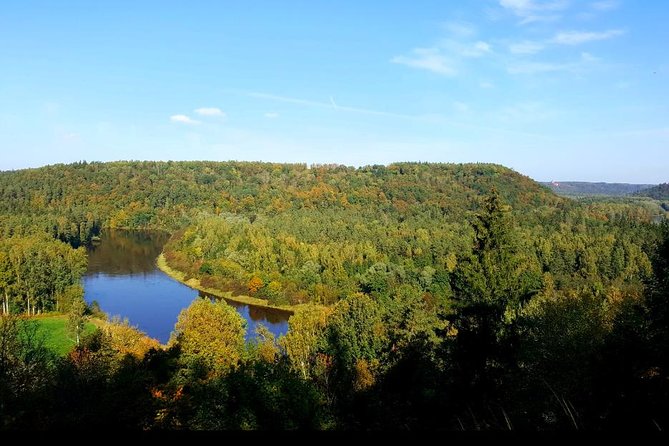
- A scenic break from Riga: The tour takes you into the Gauja River Valley and the countryside around Sigulda and Turaida.
- A full half-day: The advertised duration is about six hours, with departure at 9:00 am and return to the Riga meeting point.
Why Sigulda makes such a good day trip from Riga
Sigulda is one of the easiest ways to see a different side of Latvia without giving up a whole day. The town sits in the Gauja River Valley, where wooded slopes, sandstone formations, castle ruins, and open views replace Riga’s urban rhythm.
This is not only a castle outing. The route links several periods of Latvian history. You begin with the medieval Livonian Order, hear old folklore at Gutmanis Cave, visit Turaida’s castle and church, then finish with the modern sporting legacy of the Sigulda bobsleigh track.
That variety is the tour’s real strength. You do not spend six hours looking at similar ruins. Each stop has a different mood, and the guide provides the connections between them.
The tour begins at 9:00 am at Herdera laukums 6 in central Riga. Transport is by air-conditioned car or minivan, with Wi-Fi and bottled water provided. The group can be as large as 19 people, although the private-tour format and vehicle-based travel can feel more personal than a large coach excursion.
The listed price is $144.18 per person. That is not the cheapest way to reach Sigulda, but it includes transport, an English-speaking driver-guide, museum entrances, and a guided route that would require more planning on your own. The value improves if you want context, hotel-area convenience from a central meeting point, and flexibility for coffee or a short detour.
Food and drinks are not included. Build in your own lunch budget, and remember that the time available for a meal depends on the day’s pace and any optional stops.
More trips out to Sigulda and Turaida:
- Private Full-Day Trip to Turaida, Sigulda, and Cesis
★ 4.5 · 52 reviews - Full-Day Private Trip to Cesis, Sigulda and Turaida from Riga
★ 4.5 · 42 reviews - Private Day Tour to Sigulda, Turaida Castle and Soviet Bunker
★ 4.5 · 8 reviews
Sigulda Castle and the medieval frontier
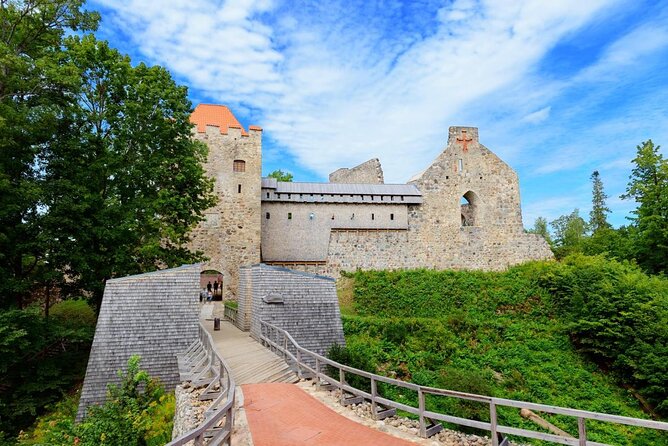
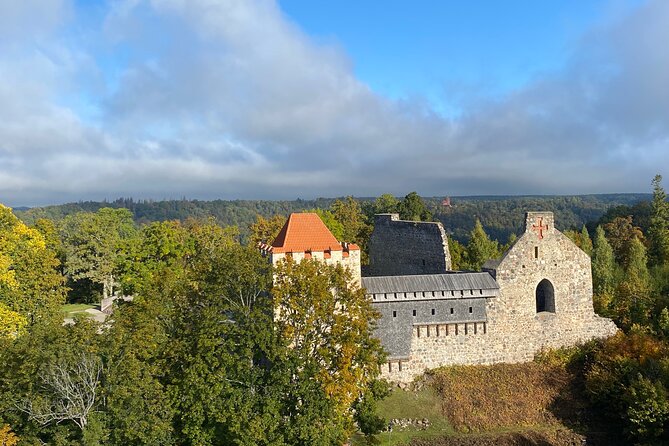
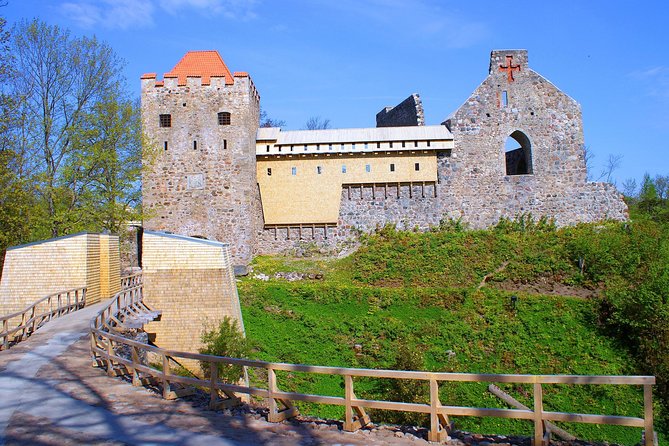
The Castle of the Livonian Order in Sigulda is your first major stop, with about 50 minutes inside the site. The fortress dates to the 13th century and was built by the Livonian Brothers of the Sword, a military religious order active during the Christian expansion into the Baltic region.
This is the place to pay attention to the guide’s explanations. The stone walls are only part of the story. You learn why Sigulda mattered as a strategic point, how castles supported military and religious power, and how battles and sieges shaped the region.
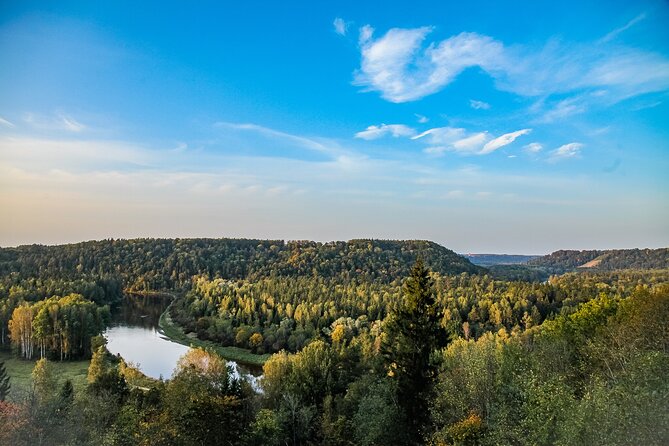
You can walk through restored towers, climb sections of the fortress walls, and visit exhibition areas with medieval weapons, archaeological finds, and information about daily life. The site also provides broad views across the Gauja Valley, making it an easy first photo stop.
Fifty minutes is enough for a useful visit, but not for a detailed examination of every display. If you enjoy medieval architecture and want time to read every panel, you may find the schedule brisk. For most people, the guide’s narration helps you focus on the most important parts.
The open setting also means weather matters. Snow can make the castle feel especially atmospheric, while rain and fog may soften or block the valley views. Bring shoes suitable for uneven outdoor surfaces, and do not count on every viewpoint looking the same in poor weather.
Gutmanis Cave and the Rose of Turaida
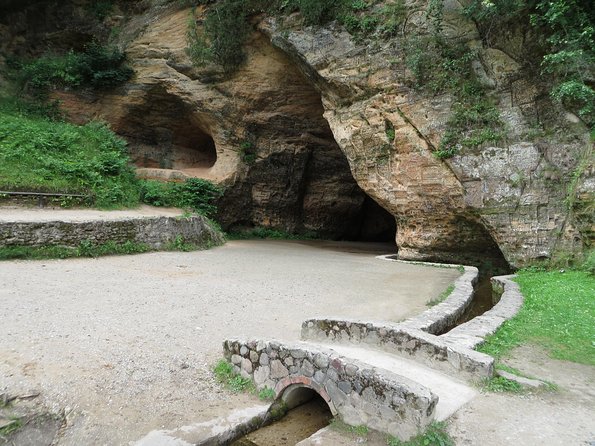
Gutmanis Cave receives about 25 minutes, so this is a short stop rather than a long walk. It is described as the oldest and largest cave in the Baltic region, carved into sandstone by water over a very long period.
The cave itself is not enormous. One review made that point plainly, which is useful to know before you arrive. Its appeal comes from the combination of geology, inscriptions, and folklore rather than from dramatic size.
The walls carry inscriptions dating back as far as the 1600s. Inside, you can feel cooler air near the spring and see the marks left by people across several centuries. Your guide will also tell the tragic story of the Rose of Turaida, a love legend linked to the cave and to Turaida Castle.
This is a good example of how the tour handles Latvian culture. You are not asked to choose between fact and folklore. The cave gives you a physical place, a long human record, and a story that still shapes how the site is remembered.
Wear shoes with a decent grip. The stop is brief, but you may walk over damp or uneven ground. If you are hoping for a substantial hike, this is not it. Think of Gutmanis Cave as a compact, atmospheric pause between the two castle visits.
Turaida Museum Reserve and its red-brick tower
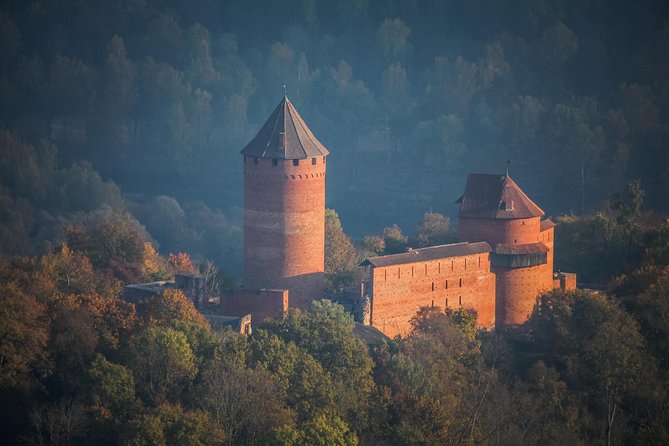
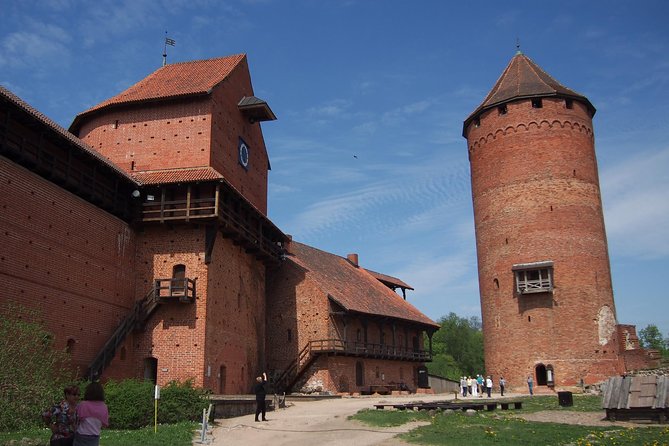
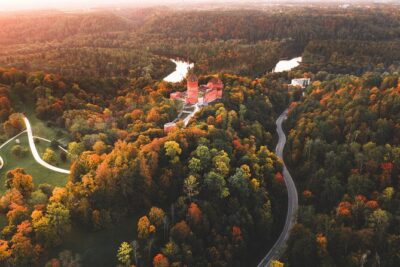
Turaida Museum Reserve is the centerpiece of the tour, with about one hour to explore. The site brings together the red-brick Turaida Stone Castle, medieval courtyards, archaeological areas, a wooden church from 1750, and views over the Gauja Valley.
The castle was originally built in 1214. Its towers and walls give you a clearer sense of medieval power than the earlier Sigulda stop, while the surrounding reserve shows how people lived and worshiped beyond the main fortress.
You can enter the castle towers and climb to a viewpoint from the tower. The reward is a wide look across the valley and surrounding countryside. If the weather is clear, this may be the most memorable view of the day. If fog settles in, the guide can adjust the schedule and may suggest an alternative such as the bobsleigh track, as happened for one group.
The 1750 wooden church adds another layer. It is smaller and quieter than the castle, but it helps you see the reserve as more than a military site. The complex connects religion, local life, archaeology, legends, and national identity in one place.
One hour gives you a solid introduction, but this is the stop most likely to leave you wanting more time. Turaida has enough to reward a longer visit, especially if you like museums or want to explore every corner of the grounds. The benefit of the guided format is that you do not have to work out the site’s long story by yourself.
Same base, a completely different kind of day:
- Riga Old Town walking tour
★ 4.5 · 304 reviews - Latvian food tasting tour at Riga Central market
★ 4.5 · 241 reviews - 2 countries! Hill of Crosses, Rundale Palace and Bauska castle
★ 5.0 · 225 reviews - Discover Riga Bike Tour
★ 5.0 · 166 reviews
Sigulda’s bobsleigh track, a modern surprise
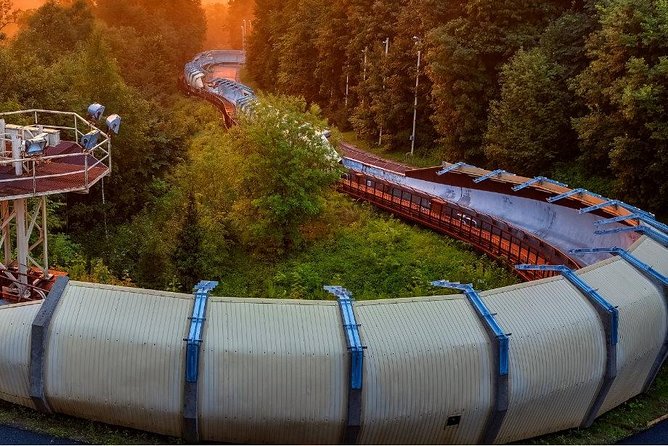
The 20-minute stop at the Sigulda Bobsleigh and Luge Track changes the tone completely. After castles, churches, and old legends, you see a large working sports facility linked to Latvia’s Olympic bobsleigh and luge tradition.
The track was built during the Soviet era and remains in use. Depending on the schedule, you may see training activity, though that cannot be guaranteed. Even without a session underway, the structure gives you a close look at a less expected part of Sigulda’s identity.
This stop is especially useful when weather spoils a scenic viewpoint. Fog can hide the valley, but it does not make the bobsleigh track disappear. One guide, Erlens, switched the plan for that reason, giving the group a more useful visit than a blocked lookout would have provided.
Twenty minutes is enough for an explanation and photographs. It is not enough for a full sporting experience, and the tour does not promise a bobsleigh ride. A previous group enjoyed a cable car ride, but that is not listed as an included feature, so ask your guide before assuming it is part of your day.
The track also shows why a flexible guide matters. A fixed coach itinerary can be awkward when the weather changes. Here, the driver-guide can make practical choices within the available time.
Guides who shape the experience
The guide is central to this tour. You are not simply being driven between four addresses. The best part of the day comes from the explanations in the vehicle and at the sites.
Erlens is repeatedly praised for being friendly, attentive, entertaining, and adaptable. He explains complicated subjects clearly, including Latvia’s shift from pre-Christian traditions through medieval conversion and into modern times. He also helps with practical choices, such as changing the sightseeing plan in fog and recommending places to eat.
Maria is described as warm and talkative, with a strong command of the castle sites and the broader history of Latvia. Edĩte is noted for her understanding of Riga, the surrounding area, and local history. Viktorija is praised for maintaining a professional, informed approach in cold and rainy weather.
Other guides may lead the tour, so you should not book with the expectation of one particular person unless the operator confirms it. Still, the repeated pattern is clear: the quality of the day depends heavily on who is behind the wheel and how well that person responds to the group.
The format lets you ask questions, request a coffee stop, and discuss a detour. One group stopped for coffee before the first castle and later enjoyed lunch at a cat bistro. Lunch is not included, and such stops depend on the schedule, but the example shows how the day can be adjusted.
Time, comfort, and the practical tradeoffs
The tour lasts about six hours, including driving between Riga, Sigulda, Turaida, and the return to Riga. The four listed visits total about two hours and 35 minutes, leaving the rest of the time for transport, explanations, parking, walking, and possible stops.
That makes the itinerary efficient rather than relaxed. You will see the main sights, but you should not expect long independent visits at every location. If you want to linger at Turaida, take extensive photographs, or read every museum display, a private custom day with more time may suit you better.
The air-conditioned vehicle is a welcome feature, especially in winter or on a wet day. Wi-Fi on board can help with basic connectivity, while bottled water removes one small thing from your packing list. You still need comfortable walking shoes, since the castles and cave involve outdoor paths, walls, or uneven surfaces.
Most people can participate, and children must be accompanied by an adult. Service animals are allowed. The tour is offered in English, and group discounts may be available.
Free cancellation is available until 24 hours before the start time for a full refund. Changes or cancellations made inside that 24-hour window are not accepted for a refund, and the cut-off follows local Latvian time.
Who will get the most from this Sigulda tour
I would choose this tour if you want a well-organized way to leave Riga without renting a car or researching several sites yourself. It suits first-time visitors who want a clear introduction to Latvian history, folklore, scenery, and modern culture in one morning and afternoon.
It is also a good match for you if you value conversation with a local guide. The strongest moments come from explanations of the Livonian Order, the Rose of Turaida legend, the church and castle complex, and Latvia’s sporting history.
Families can benefit from the changing subject matter. A child who loses interest in castle walls may pay attention to the cave or bobsleigh track. The walking is manageable for most people, but the itinerary still requires outdoor movement, so good shoes matter.
I would hesitate if your priority is a long hike, a slow museum visit, or a full meal at a fixed restaurant. The stops are compact, and food is extra. You should also be prepared for weather to affect the views, especially at the castles and valley lookouts.
Should you book it?
Book this Sigulda and Turaida tour if you want a varied half-day beyond Riga, with transport, admissions, and a guide who can explain what you are seeing. The combination of medieval castles, Gutmanis Cave, folklore, and a bobsleigh track gives you more range than a simple castle transfer.
The price is reasonable for a guided, vehicle-based day once you count the included entrances and the convenience of returning to Riga. It is less compelling if you prefer to travel slowly or need a guaranteed cable car ride, meal, or sporting activity, since those are not promised.
For most visitors with limited time in Latvia, I would book it. Ask about the likely guide, possible coffee or lunch timing, and any optional detours before departure. Then bring walking shoes, leave room for changing weather, and give Turaida your full attention.
FAQ
How long does the Sigulda and Turaida tour last?
The tour lasts approximately six hours. It starts at 9:00 am and returns to the meeting point in Riga.
Where does the tour start?
The meeting point is Herdera laukums 6, Centra rajons, Riga, LV-1050, Latvia.
Is transportation included?
Yes. Transport is provided in an air-conditioned car or minivan, with Wi-Fi on board and bottled water.
What language is the tour offered in?
The tour is offered in English and includes an English-speaking driver-guide.
Are entrance fees included?
Yes. Museum entrances and the listed site admissions are included.
Is food included in the price?
No. Food and drinks are not included. Coffee stops and detours can be arranged with the driver.
How many people can join the tour?
The activity can have a maximum of 19 participants. Group discounts are available.
Can children join the tour?
Yes. Children may participate, but they must be accompanied by an adult.
What is the cancellation policy?
You can cancel at least 24 hours before the start time for a full refund. Cancellations or changes made less than 24 hours before the start time are not accepted for a refund.
Just added around Riga
- Ultimate Art Nouveau Experience in Riga – Private Tour★ 5.0 · 4 reviews
- Tour from Riga to Vilnius: Bauska Castle, Rundale Palace and The Hill of Crosses★ 5.0 · 3 reviews
- Group Tour: Sigulda and Turaida from Riga.★ 4.5 · 3 reviews
- Fun Walk Private Tour Around Central Market Riga★ 4.5 · 3 reviews
- Riga Medieval Dinner★ 4.0 · 4 reviews
- Riga’s Architecture: A self-guided audio tour of the city’s art nouveau history★ 5.0 · 3 reviews
- Hiking Adventure in Gauja National Park – 7 Days★ 5.0 · 3 reviews
- Latvia’s Switzerland and Gauja National Park Tour★ 5.0 · 3 reviews
Sigulda Day Trips, compared.
Full-Day Private Trip to Cesis, Sigulda and Turaida from Riga
Read our review →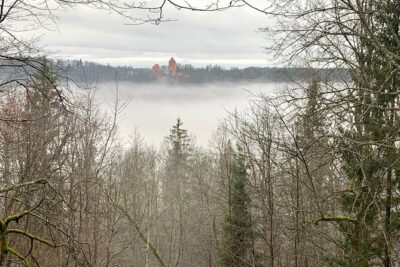
Private Day Tour to Sigulda, Turaida Castle and Soviet Bunker
Read our review →
Road Trip to Cēsis, Līgatne, Āraiši and Sigulda – All Inclusive
Read our review →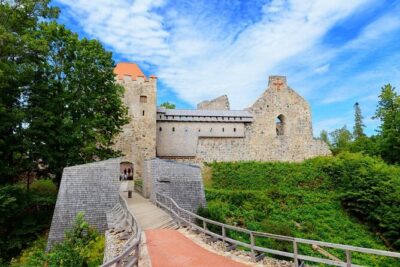
Private Full-Day Hiking Tour in Sigulda and Gauja National Park
Read our review →
All Inclusive Honest History Tour – Āraiši, Cēsis, Līgatne, Sigulda
Read our review →
Browse the lists this tour appears in