
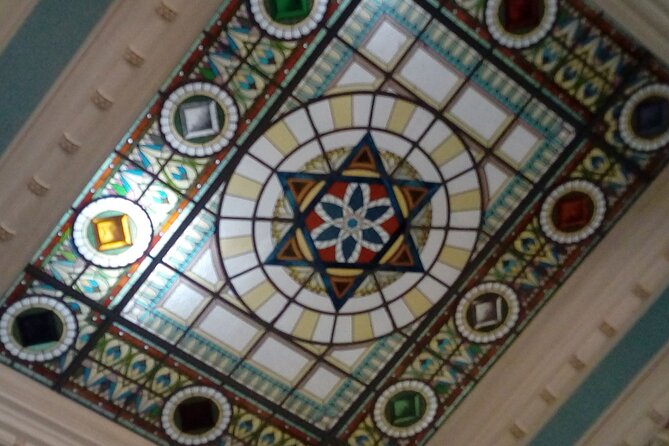
Reviewed · HISTORICAL TOURS
Riga Jewish History Tour
Riga’s Jewish story comes into sharp focus on this private tour, which links elegant art nouveau streets with the former ghetto, Holocaust memorials, and the city’s surviving synagogue. The contrast is the point: you see both the cultural life that shaped Riga and the places where that life was nearly destroyed.
I like the private car and flexible pace, especially because the sites are spread across the city. I also like the way the tour begins with architecture, including work by Jewish architect Mikhail Eisenstein, before moving to the difficult wartime chapters. The main consideration is emotional weight. This is a serious tour, not a light city outing, and you should allow for two extra donations.
Key points
- Jewish Riga beyond the Holocaust: The tour begins with art nouveau buildings, Jewish cultural life, and the birthplace of philosopher Isaiah Berlin.
- Private transport saves time: A car connects central Riga, the former ghetto, Rumbula Forest, and the museums without making you navigate between distant sites.
- Rumbula Forest is the longest stop: Plan about an hour at the memorial, where more than 25,000 people were killed in late 1941.
- Armands sets the pace: The guide is praised for answering questions, adding an extra stop when useful, and allowing more time when a site deserves it.
- The synagogue visit has extra cost: Admission is not listed as included, and a donation is required on site. The Holocaust Museum also requests €5 per person.
- Saturday needs planning: Some places may be closed for Shabbat, but Armands has adjusted the route and substituted another place of interest.
Riga’s Jewish story begins with art nouveau
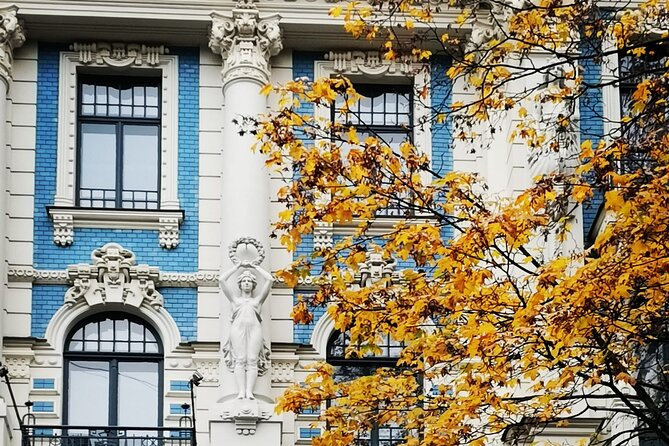
The first stop gives you a useful correction to the idea that Jewish history in Riga begins and ends with the Holocaust. In the art nouveau district, several handsome buildings were designed by Jewish architect Mikhail Eisenstein. One building is also connected with philosopher Isaiah Berlin, who was born there.
You get about 30 minutes here, with no admission charge. That is enough time to look up at the façades, take photographs, and hear how Jewish residents contributed to Riga’s cultural and architectural life.
I like this opening because it puts people before statistics. You see Jewish achievement and daily life first, then learn what was lost. The architectural setting also makes the stop easy to enjoy for anyone in your group who is interested in Riga’s famous buildings, not only in Jewish genealogy or wartime history.
The stop is still fairly brief. If you want a long architecture walk or detailed discussion of every art nouveau façade, this tour will not replace a dedicated architecture tour. Its purpose is to establish context before the route turns darker.
More history tours around Riga:
- Cesis: Medieval Heritage and Natural Treasures
★ 4.0 · 4 reviews - Riga’s Architecture: A self-guided audio tour of the city’s art nouveau history
★ 5.0 · 3 reviews - All Inclusive Honest History Tour – Āraiši, Cēsis, Līgatne, Sigulda
★ 5.0 · 3 reviews
Latgale Suburb shows the former ghetto area
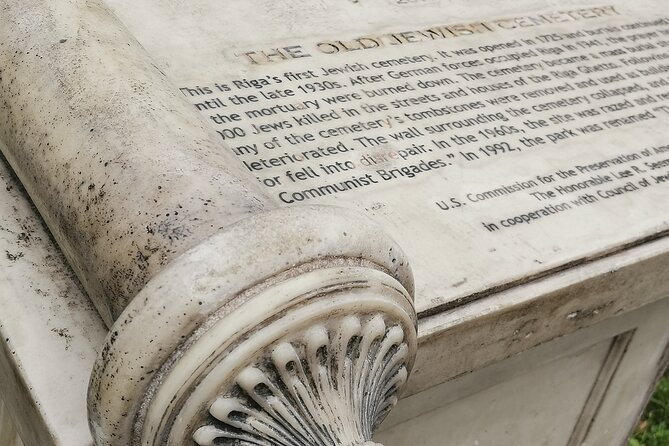
The tour then moves to Latgale Suburb, the former territory of the Riga Jewish Ghetto. The buildings here remain in much the same condition as they did roughly 80 years ago, giving you a physical sense of the wartime setting.
You spend about 30 minutes in the area. There is no entrance ticket, and the value comes from seeing the streets rather than entering a formal attraction. The guide helps connect the surviving buildings with the ghetto’s history, so you are not simply looking at old structures without context.
This is one of the tour’s more important stops because it makes the scale of the story easier to grasp. A museum can explain dates and policies. Walking through the former ghetto area lets you picture the setting in which those events occurred.
Keep your expectations realistic. This is not presented as a restored historical district or a polished open-air museum. The fact that many buildings remain much as they were is part of the impact, but it also means the experience may feel quiet and visually understated.
The Great Choral Synagogue Memorial marks a crime
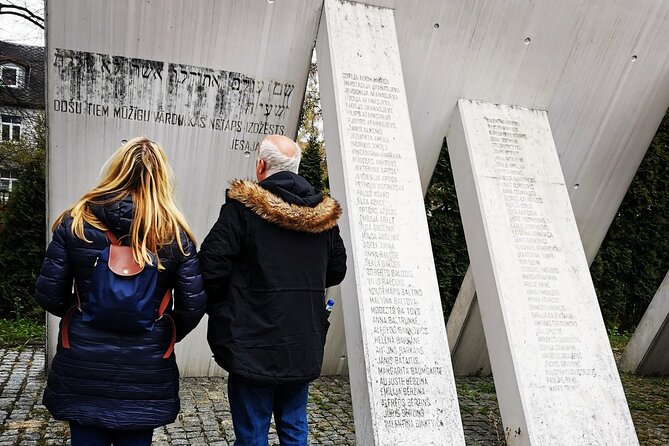
At the Great Choral Synagogue Memorial, the guide explains the events of July 4, 1941. More than 300 Jewish refugees from Lithuania and local Latvian Jews were forced into the synagogue basement, which was then deliberately burned.
The visit lasts about 15 minutes and is free. It is short, but the location carries considerable weight. A memorial replaces the synagogue that once served Riga’s Jewish community, and the stop asks you to pause rather than rush through another sightseeing point.
I would not treat this as a quick photo stop. The details are painful, and the tour’s strength here is its directness. Armands is described as treating these sites with care and respect, which matters when the information is this difficult.
Because the memorial visit is brief, you may want to ask questions while you are there. The private format gives you room to do that without worrying about holding up a larger group.
Rumbula Forest requires time and quiet
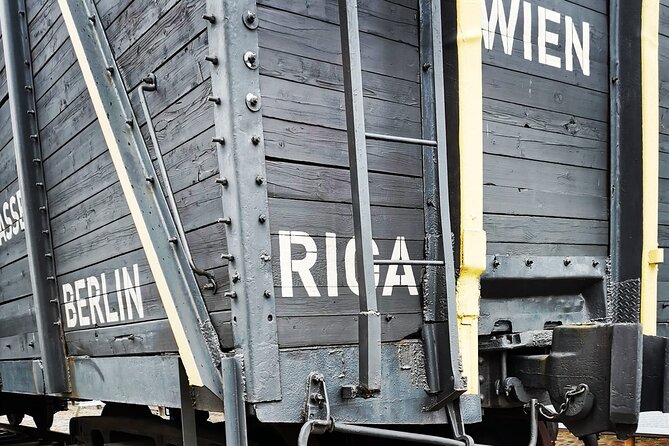
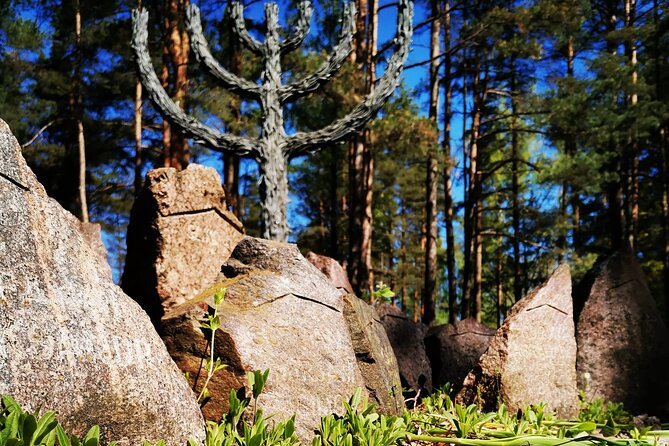
The longest stop is Rumbula Forest, where the memorial covers the mass murder of Riga’s Jewish population in late 1941. On November 30 and December 8, more than 25,000 people were killed there, including about 1,000 Jews deported from Germany.
You spend about an hour at the memorial. There is no admission fee, but the visit is not emotionally free. The setting calls for quiet attention, and you should be prepared for a serious pause in the day.
The memorial opened on November 29, 2002. Its location away from central Riga also explains why private transportation is so useful. Reaching Rumbula by car avoids turning a difficult visit into a complicated transport exercise.
I like that the tour does not reduce Rumbula to a date and a number. You have time to look around, listen, and ask about what happened. The hour also gives you some control over the pace. If you need a moment before moving on, a private tour is kinder than a fixed group schedule.
This part may not suit children or anyone seeking an easygoing city excursion. The experience is suitable for most participants according to the tour information, but physical participation and emotional readiness are different questions. You know your group best.
Same base, a completely different kind of day:
- Riga Old Town walking tour
★ 4.5 · 304 reviews - Latvian food tasting tour at Riga Central market
★ 4.5 · 241 reviews - 2 countries! Hill of Crosses, Rundale Palace and Bauska castle
★ 5.0 · 225 reviews - Discover Riga Bike Tour
★ 5.0 · 166 reviews
The Riga Ghetto and Holocaust Museum adds personal detail
At the Museum of Riga Ghetto and Holocaust in Latvia, you get a closer look at the Riga Ghetto, the Holocaust in Latvia, and Jewish life before the Holocaust. The visit lasts about 30 minutes.
The museum asks for a donation of €5 per person, which is not included in the tour price. Bring that amount in your planning, along with the separate synagogue donation later in the day.
I see the museum as a useful bridge between the outdoor memorials. At Rumbula and the synagogue memorial, the places carry the story. Here, exhibits can help organize the timeline and show the difference between Jewish life before the war, persecution during the occupation, and the destruction that followed.
Thirty minutes is enough for a focused visit, though not for every display in detail. If the subject is central to your family or research interests, tell Armands early. The private format makes it possible to explain what you most want to understand and to spend your attention where it matters most.
The museum is also a good place to look for a book. One person on the tour bought a book there, so you may find something useful to take home, though the available titles are not specified.
Peitavas Street Synagogue brings the story into the present
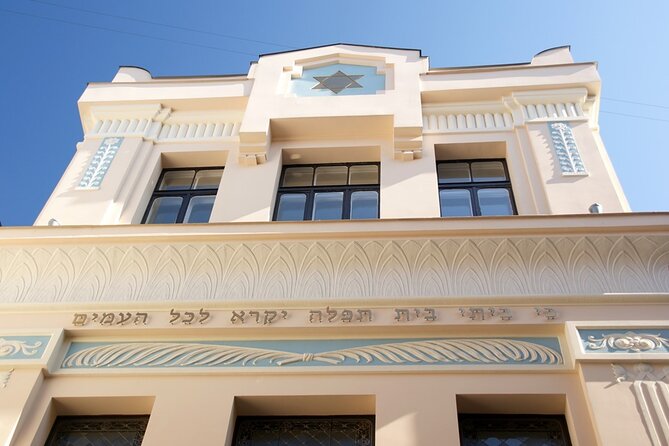
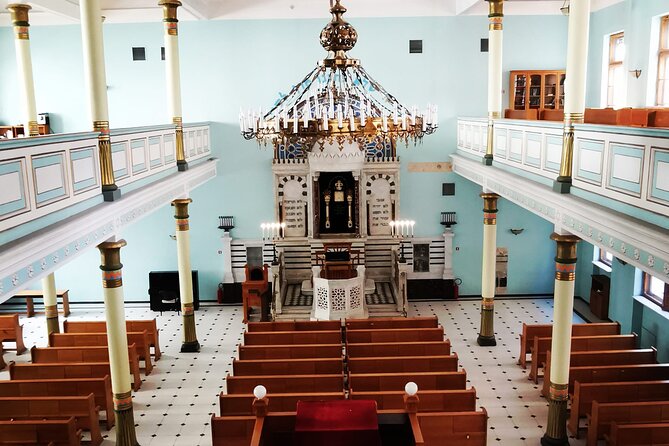
The final stop is Riga Synagogue on Peitavas Street, an art nouveau building designed with ancient Egyptian motifs and built between 1903 and 1905. The visit lasts about 45 minutes.
This is one of the tour’s most distinctive stops because it connects living Jewish practice with Riga’s architectural past. After seeing memorials and museum exhibits, you enter a place that remains a synagogue and a cultural monument.
A donation is required on site and is not included in the $96.33 tour price. The tour provides a kipa if your head is not already covered by a cap, hat, scarf, or other head covering. The stated dress code is relaxed, but you should still approach the synagogue respectfully.
The synagogue visit may be affected by the day you choose. Saturday is Shabbat, and some places may be closed. Armands has been flexible in that situation, taking people to another place of interest instead, but you should not assume every stop will operate normally on Saturday.
Why the private format matters in Riga
This is a private activity for your group only, with guide service and private transportation included. Pickup is offered from your hotel or apartment, but you need to wait outside because the vehicle cannot park in Old Riga.
That small pickup detail matters. If your accommodation is in the Old Town, arrange a clear meeting place outside the restricted area rather than expecting the car to come to the front door. The tour starts at 9:00 a.m., so give yourself time to reach the pickup point.
The vehicle is more than a comfort feature. The route covers central architecture, Latgale Suburb, the Great Choral Synagogue Memorial, Rumbula Forest, the ghetto museum, and the synagogue. Moving by car keeps the day within roughly 3 to 4 hours.
The private format also changes the tone. You can ask Armands to explain a date, repeat a point, or pause longer at a memorial. Several people found that the tour ran beyond the original time because they were given extra time at sites. That flexibility is valuable here, since the most meaningful parts may not fit neatly into a stopwatch.
You should still remember that extra time is not guaranteed in every circumstance. The route has a planned structure, and the final timing depends on your questions and how long you spend at each place.
Is $96.33 a fair price?
At $96.33 per person, this is not the cheapest way to see Riga. You are paying for a private English-language guide, private transportation, hotel or apartment pickup, and a route that would be awkward to organize independently in a short morning.
The value improves as your group size increases, since the same private vehicle and guide serve only your party. Group discounts are offered, though the exact discount is not provided, so check the final price before booking.
You should also budget for the €5 museum donation and the required synagogue donation. Those costs are small beside the tour price, but they are easy to overlook because they are paid separately.
I think the price makes sense if you want a focused Jewish history route and the ability to ask personal questions. It makes less sense if you only want a general introduction to Riga or prefer to spend the morning on broad sightseeing. This tour is built around a specific subject and handles it seriously.
The rating is listed as 5 from 9 reviews, and the strongest pattern in the feedback is not simply approval of the route. It is the guide’s care with questions, his willingness to allow more time, and his ability to add an extra stop when useful. Armands is also praised for admitting when he does not know an answer, a small but important sign of a trustworthy guide.
Who will get the most from this tour?
I would recommend it most to people with a family connection to Latvian, Lithuanian, German, or Eastern European Jewish history. It also suits anyone who wants to understand Riga beyond its art nouveau façades and central squares.
The tour can work well for a mixed-interest group. The opening architecture gives non-specialists something visual and accessible, while the ghetto, forest, museum, and synagogue provide the serious historical core.
You should choose it if you value conversation. The private format is especially useful when you have names, dates, family stories, or religious questions you want to discuss. It also suits people who dislike being hurried from one memorial to the next.
I would hesitate to recommend it as a family-friendly sightseeing outing without first considering the subject matter. The Holocaust material is explicit in its purpose, and Rumbula in particular can be hard to process. The tour information says most people can participate, but that does not mean the emotional content will feel easy.
Practical details before you book
The tour is offered in English and lasts approximately 3 to 4 hours. Confirmation is provided when you book, and free cancellation is available until 24 hours before the start time. Changes or cancellations inside that 24-hour window are not accepted for a refund.
Wear whatever is comfortable, but remember the synagogue visit. A kipa is provided if your head is not covered, and a donation is required at the synagogue. The museum requests €5 per person.
If Saturday is your only available day, ask about the route before booking. Shabbat closures can affect the schedule, though Armands has substituted another place of interest when needed.
Finally, be ready for a morning that shifts in mood. You begin with beautiful buildings and the achievements of Riga’s Jewish community, then move through forced removal, murder, memorialization, and the survival of Jewish religious life. That arc is precisely what gives the tour its meaning.
Should you book the Riga Jewish History Tour?
Book it if you want a personal, place-based account of Jewish Riga, with private transportation and enough flexibility to ask questions. The combination of art nouveau architecture, the former ghetto, Rumbula Forest, the Holocaust Museum, and Peitavas Street Synagogue gives you a fuller picture than a memorial-only visit.
I would especially choose it for a first visit to Riga when Jewish history is a priority, or for a family group that wants to move at its own pace. Skip it if you are looking for light sightseeing, dislike museum and memorial visits, or have only a short window and want to see Riga’s main general attractions.
The best reason to book is the structure: the tour shows what Jewish life contributed to Riga, what was destroyed, and what remains. That is a difficult story, but the private format and Armands’ patient approach give it the attention it deserves.
FAQ
How long does the Riga Jewish History Tour last?
The tour lasts approximately 3 to 4 hours. The listed stops total about 3.5 hours, and the timing can run longer if your group spends extra time at the sites.
What time does the tour start?
The scheduled start time is 9:00 a.m.
Is hotel pickup available?
Yes. Pickup is offered from your hotel or apartment. You must wait outside because the vehicle cannot park in Old Riga.
Is transportation included?
Yes. Private transportation and guide services are included in the tour price.
What language is the tour offered in?
The tour is offered in English.
Are the museum and synagogue donations included?
No. A €5 donation per person is requested at the Riga Ghetto and Holocaust Museum, and a donation to the synagogue is required on site.
Can I cancel for a full refund?
Yes, if you cancel at least 24 hours before the experience start time. Cancellations or changes made less than 24 hours before the start time are not accepted for a refund.
Just added around Riga
- Ultimate Art Nouveau Experience in Riga – Private Tour★ 5.0 · 4 reviews
- Tour from Riga to Vilnius: Bauska Castle, Rundale Palace and The Hill of Crosses★ 5.0 · 3 reviews
- Fun Walk Private Tour Around Central Market Riga★ 4.5 · 3 reviews
- Group Tour: Sigulda and Turaida from Riga.★ 4.5 · 3 reviews
- Riga’s Architecture: A self-guided audio tour of the city’s art nouveau history★ 5.0 · 3 reviews
- Riga Medieval Dinner★ 4.0 · 4 reviews
- Hiking Adventure in Gauja National Park – 7 Days★ 5.0 · 3 reviews
- Jurmala sunset tour★ 4.5 · 3 reviews
Historical Tours, compared.


All Inclusive Honest History Tour – Āraiši, Cēsis, Līgatne, Sigulda
Read our review →