

Reviewed · CITY TOURS
Private grand Riga city tour
Riga packs a surprising amount into a small center: ornate Art Nouveau streets, a huge food market, medieval lanes, Soviet-era reminders, and the broad Daugava River. This private tour ties those pieces together in four hours, using a car or minivan for the wider sights and a walking tour for Old Town.
I like the hotel pickup and private vehicle, which save time if you have only one day in Riga. I also like the flexible guiding style associated with Erlens and Elvis, who can slow down for coffee, answer questions, or adjust the route for interests such as Jewish heritage. The main drawback is the brisk schedule: many landmarks receive only about ten minutes, so this is an overview rather than a series of long visits.
Key points at a glance
- A useful Riga overview: See Art Nouveau Riga, Central Market, Old Town, the Freedom Monument, Riga Castle, and more in about four hours.
- Private touring matters: Your group travels alone, so the guide can adjust the pace and spend more time on subjects that interest you.
- Strong guide feedback: Erlens is praised for fluent English, thoughtful answers, flexibility, and attention to detail. Elvis is also noted for being personable and adaptable.
- Good transport plan: Air-conditioned car or minivan service connects sights that are spread beyond the Old Town, with Wi-Fi and bottled water included.
- Mostly exterior sightseeing: Museum entry is not included, and most listed stops are short photo and explanation visits.
- Best for limited time: The tour suits a first visit, a cruise or stopover, or anyone who wants a clear introduction before exploring alone.
Why this four-hour route works in Riga
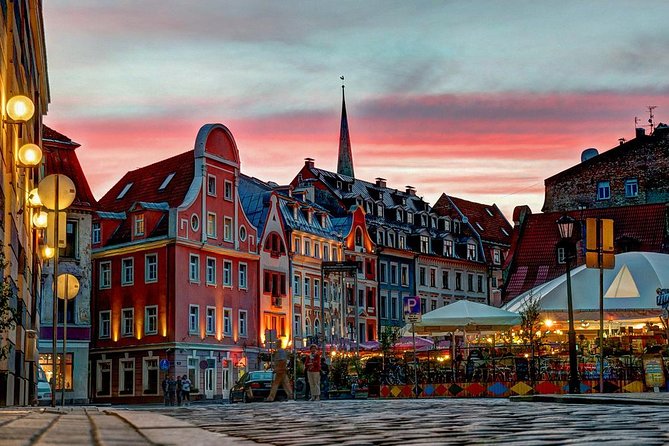
Riga is easy to explore on foot once you reach the Old Town, but several important sights sit outside its medieval core. Art Nouveau streets, Central Market, the Latvian National Museum of Art, and the National Library are not all part of one compact walking loop.
That is where the private vehicle earns its keep. Instead of spending your short visit figuring out transport, you can ride between districts and then walk through the old center with a guide. The route also gives you a quick sense of how Riga changed over time, from medieval churches and defensive towers to grand national buildings and 20th-century architecture.
The tour begins at 10:00 a.m. with pickup from a centrally located hotel, apartment, hostel, or similar address. The exact rhythm can vary, since this is a private activity. You are not waiting for a large group to take photographs or finish a slow coffee stop.
I would think of the experience as a well-organized orientation. You will see the headline sights, hear the basic story of Latvia and Riga, and finish with a better idea of where to return for a museum, meal, market visit, or longer walk.
A few more Riga half-days to weigh up
- Private Riga Old Town Walking Tour
★ 5.0 · 62 reviews - Private Full-Day Trip to Turaida, Sigulda, and Cesis
★ 4.5 · 52 reviews - Ultimate Husky dog sledding experience in Latvia – Private tour from Riga
★ 4.5 · 45 reviews
Art Nouveau Riga, where the city turns theatrical
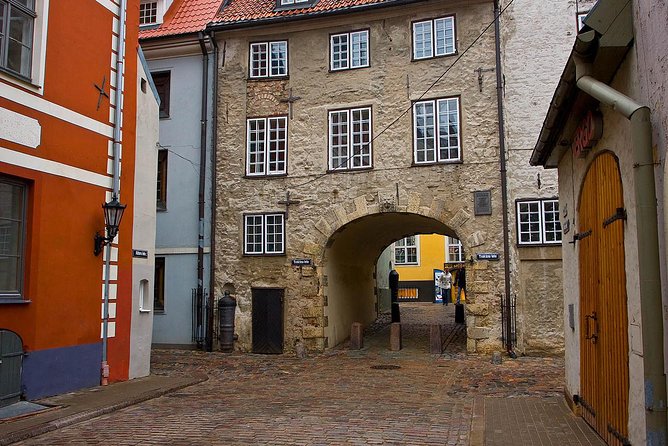
Riga is especially known for its Art Nouveau buildings, and the tour begins with about 20 minutes in this district. Art Nouveau developed in the late 19th and early 20th centuries, with flowing lines, decorative details, sculpted faces, and architecture that treats a building facade almost like a work of art.
This is a good place for a guide to add context. Without help, you may notice elaborate windows and ornament but miss the details that make the style distinctive. With a private guide, you can ask why Riga became such an important center for this architecture and compare one facade with another.
Twenty minutes is enough for an introduction and photographs, but not for a long architectural walk. If Art Nouveau is your main reason for visiting Riga, you will want extra independent time later. For most people, though, this short stop is a smart opening because it shows a side of the city that medieval Old Town alone cannot provide.
Central Market, the practical heart of Riga
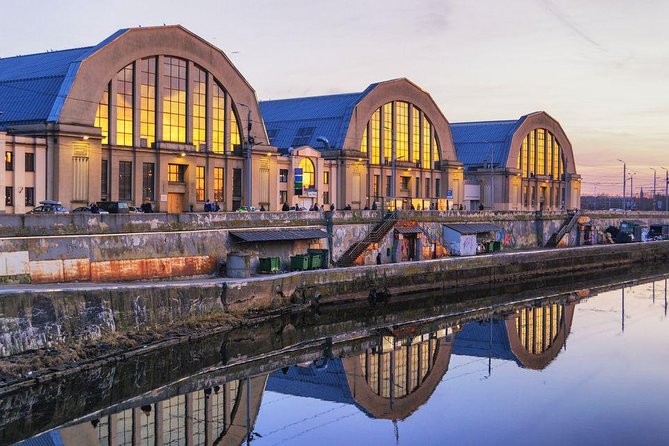
The tour then reaches Riga Central Market for about 20 minutes. It sits near the Old Town, the Daugava River, the bus terminal, and the central railway station. The market is housed in former airship hangars, a detail that gives the visit a strong sense of place.
This is not just a decorative stop. It is where you can get a glimpse of everyday shopping in Riga, with food stalls and local trade taking place in a setting used by large numbers of residents each day. The market is a useful counterpoint to grand churches and monuments because it shows the city in an ordinary, practical mood.
Twenty minutes is short. You will have time to look around, take in the scale, and perhaps identify foods you would like to try later, but not to browse every section at leisure. Food and drinks are not included, so treat this as an introduction unless you arrange a longer stop with the guide.
The private format helps here. If your group cares more about the market than architecture, you can ask whether the timing can be adjusted. The published route allows coffee stops and detours, though any change depends on the four-hour limit.
Entering Old Riga through its best-known landmarks
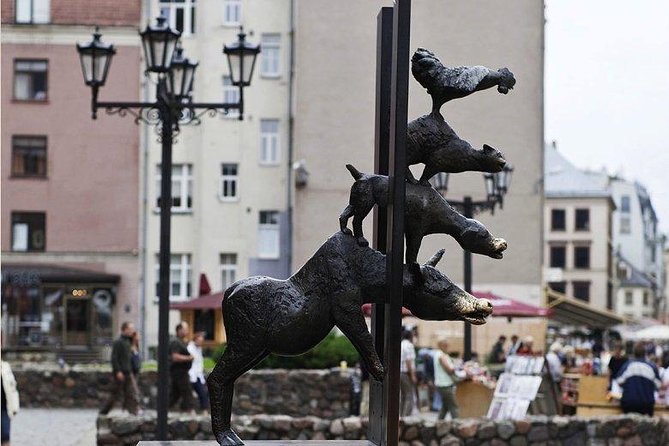
After the vehicle portion, the experience turns to a guided walk through Old Town. The House of the Black Heads is one of the first major sights, located in the heart of the historic center. Its grand facade and ceremonial appearance make it one of Riga’s most memorable buildings, even if you only have ten minutes.
The nearby Freedom Monument gives the tour a different tone. The 42.7-meter monument is made of granite and copper and honors Latvia’s drive for freedom and independence. The three golden stars held by the figure above represent Kurzeme, Vidzeme, and Latgale, Latvia’s historic regions.
This is the kind of stop where a guide adds real value. A photograph tells you what the monument looks like, but not why it matters to Latvian identity. The tour gives you a compact explanation without requiring a separate museum visit.
The Latvian National Museum of Art is another listed sight. Its building was modernized and reopened in 2016 while retaining its older character. The tour does not include museum admission, so you should not expect an art collection visit within the standard route. You will see the exterior and receive an explanation, then decide if you want to return on your own.
Same base, a completely different kind of day:
- Riga Old Town walking tour
★ 4.5 · 304 reviews - Latvian food tasting tour at Riga Central market
★ 4.5 · 241 reviews - 2 countries! Hill of Crosses, Rundale Palace and Bauska castle
★ 5.0 · 225 reviews - Discover Riga Bike Tour
★ 5.0 · 166 reviews
The Daugava, the Castle of Light, and Riga’s cultural face
The National Library of Latvia, known as the Castle of Light, sits across the Daugava from Old Town. Its striking modern form makes it easy to spot from the historic center. Including it in the route helps you see Riga as a living capital rather than a preserved medieval quarter.
The Latvian National Opera and Ballet adds another layer. Its building opened in 1923, and the institution presents opera, ballet, symphonic, and chamber performances. You will see the exterior during the city overview, not attend a performance, but the stop helps explain Riga’s role as a cultural center.
The Latvian Academy of Sciences observation deck is also included among the sights viewed during the tour. From the 17th-floor balcony, 65 meters above the city, you can see Old Town and the Daugava River. The supplied tour details do not promise admission to the deck, so ask your guide whether a visit fits the day’s timing and arrangements. The listed price excludes museum entrances, and you should not assume every observation point is included.
This is a good example of why a private tour needs a little communication. Tell your guide early if you want interior visits or longer photo stops. The route has many points of interest, but four hours cannot provide a full visit to every building.
St. Peter’s Church and the medieval core
St. Peter’s Church is one of the Old Town’s key landmarks, with the city’s tallest church spire. The present structure reflects medieval Gothic design and is among the most important historic buildings in the Baltic region.
The stop is listed at about ten minutes, which gives you time to appreciate the exterior and hear the basic story. It is not enough for a leisurely interior visit or a long tower experience. If the church is high on your list, ask about available time before the tour begins.
St. John’s Church follows. It began as a chapel connected with a Dominican monastery in the 13th century and later took on its present Gothic appearance. Ten minutes is again a quick look, but the pairing of St. John’s and St. Peter’s helps you compare two important religious buildings within a short walk.
Livu Square offers a lighter moment. The square occupies the former route of the Riga River, which once carried grain and gradually narrowed before disappearing from the city. Today it is a public gathering place with flower beds, restaurants, and pedestrian traffic. The guide’s explanation turns an ordinary-looking square into a clue about how Riga’s streets developed.
Riga Castle, the Three Brothers, and the old defenses
Riga Castle has occupied the Daugava riverbank for more than 700 years and now serves as the residence of Latvia’s president. Its long history includes war, destruction, and changing rulers. The ten-minute visit is primarily an exterior look, but the location makes it a useful link between the city’s political past and present.
The Three Brothers are a group of old dwelling houses, the oldest such complex in Riga, dating from the 15th century. Their differing facades show how residential architecture changed over time. This is one of the more compact stops, yet it works well during a walking route because you can see the buildings without a long detour.
The Swedish Gate is the only remaining gate from Riga’s former fortification wall. Nearby, the Powder Tower was once part of the medieval defensive system and was originally called the Sand Tower.
These final stops help you read Old Town as a fortified city, not just a collection of attractive streets. I like that the route includes them, because first-time visitors often focus on churches and ornate squares and miss the defensive story. The short timing means your guide must keep the explanations focused, but a private format lets you ask for more detail if fortifications interest you.
What the guide and vehicle add
The tour includes an English-speaking driver-guide, an air-conditioned car or minivan, Wi-Fi, bottled water, and pickup and drop-off. Those details matter most in warm weather, poor weather, or when you are carrying luggage or managing limited energy.
The guide names connected with the experience include Erlens and Elvis, with Elvis described as a nickname. Erlens is praised for fluent English, thoughtful answers, flexibility, and a willingness to go beyond a fixed script. One private group used the time for a coffee break, while another arranged attention to Jewish sites and received a route adjusted to those interests.
That flexibility is the main reason to choose private touring here. You can ask for a slower pace, more time at a favorite sight, or a detour connected to your family story. The guide has also accommodated mobility limitations and personal preferences, though you should explain your needs when booking.
You still need to be realistic. The route contains many stops, and most are allocated ten minutes. A guide can adjust the emphasis, but cannot turn a four-hour overview into a full museum day.
Is $239.38 per person fair?
At $239.38 per person, this is not a budget sightseeing option. The value depends heavily on the size of your group. Since the activity is private, the cost pays for a dedicated guide, driver, vehicle, hotel transfers, and a route tailored to your party rather than a seat on a large shared bus.
For a couple, the price may feel high, especially because food, drinks, and museum entrances are extra. For a family or group dividing the cost, the private setup becomes easier to justify. You also save the time and effort of organizing transport between Art Nouveau Riga, Central Market, the riverfront, and Old Town.
I would book it if you have only a few hours, care about personal attention, or want history explained in clear English. I would skip it if you prefer to wander slowly, spend hours inside museums, or are comfortable arranging Riga’s central sights on your own.
The rating provided is 4.9 from 13 reviews, with 100 percent recommending the experience. That is a small sample, so I would treat it as encouraging rather than conclusive. The consistent strengths are guide friendliness, clear English, flexibility, and the amount seen in a limited time.
Practical advice before you go
Wear walking shoes. Even with the vehicle, the Old Town portion involves walking over historic streets and stopping frequently.
Tell the guide what matters most before setting off. You might prioritize Art Nouveau, markets, churches, political history, Jewish heritage, photography, or a coffee break. The route can include detours, but time is limited.
Do not assume the tour includes interior admission. Museum entrances are excluded, and the itinerary is mainly built around exterior views and guided explanations. If you want to enter a museum or use the Academy of Sciences observation deck, ask whether it can fit your schedule and what extra charges apply.
The free cancellation policy allows a full refund if you cancel at least 24 hours before the local start time. Changes or cancellations inside that window are not accepted for a refund.
Should you book this private Riga tour?
Book it if you want a fast, personal introduction to Riga with hotel pickup and a guide who can adjust the route. It is especially useful for a first visit, a short stop in the city, or a group with mixed interests.
I would choose it for the combination of Art Nouveau, Central Market, Old Town, and major national landmarks. I would not choose it as a substitute for slow sightseeing, museum visits, or a full food tour. Go in expecting a smart four-hour overview, speak up about your priorities, and you should finish with a clear map of what deserves more of your time.
FAQ
How long is the Riga private city tour?
The tour lasts approximately four hours and starts at 10:00 a.m.
Where does pickup take place?
Pickup is offered from a centrally located Riga hotel, apartment, hostel, or similar accommodation.
Is the tour private?
Yes. Only your group participates in the activity.
What language is the tour offered in?
The tour is offered in English with an English-speaking driver-guide.
Is transportation included?
Yes. Transportation is provided in an air-conditioned car or minivan. On-board Wi-Fi and bottled water are also included.
Are museum entrances included?
No. Museum entrances are not included. Food and drinks are also separate.
Can the itinerary be adjusted?
Coffee stops and detours can be arranged. The private format also allows the guide to respond to your group’s interests and preferences.
What happens if I need to cancel?
You can cancel at least 24 hours before the local start time for a full refund. Cancellations or changes made less than 24 hours before the start are not accepted for a refund.
Just added around Riga
- Ultimate Art Nouveau Experience in Riga – Private Tour★ 5.0 · 4 reviews
- Tour from Riga to Vilnius: Bauska Castle, Rundale Palace and The Hill of Crosses★ 5.0 · 3 reviews
- Fun Walk Private Tour Around Central Market Riga★ 4.5 · 3 reviews
- Group Tour: Sigulda and Turaida from Riga.★ 4.5 · 3 reviews
- Riga Medieval Dinner★ 4.0 · 4 reviews
- Riga’s Architecture: A self-guided audio tour of the city’s art nouveau history★ 5.0 · 3 reviews
- Hiking Adventure in Gauja National Park – 7 Days★ 5.0 · 3 reviews
- Latvia’s Switzerland and Gauja National Park Tour★ 5.0 · 3 reviews
City Tours, compared.

Best of Latvia, Jurmala, Kemeri N Park, Kuldiga City, Food & More
Read our review →
Private Boat Tour experience in Riga (City Canal and Daugava)
Read our review →


Riga’s Architecture: A self-guided audio tour of the city’s art nouveau history
Read our review →Browse the lists this tour appears in