Reviewed · PRIVATE
Private Soviet Riga tour
Riga’s Soviet past is not confined to a museum. It is written into its monuments, churches, hotels, streets, and government buildings. This two-hour private walk connects those pieces, from the Latvian Riflemen monument to the former Hotel Latvia and the KGB headquarters.
I like the tour’s clear focus and its small scale. You can ask questions as you go, and guide Edvards is known for explaining difficult subjects in plain language, often adding his own family’s experience. The main drawback is the brisk schedule: ten stops in about two hours means you get a strong overview rather than long visits inside each place.
Key points to know before booking
- Ten central Riga stops: The route links Soviet-era monuments, streets, churches, architecture, and places tied to independence.
- A private guide for your group: The price covers up to 15 people, so the value improves sharply with a larger party.
- Personal stories add weight: Edvards connects political events with family experience and welcomes questions between stops.
- The route covers both oppression and resistance: You learn about deportations and surveillance, but also the Baltic Way and the 1991 barricades.
- It finishes outside the Old Town: The Daile Theatre is about a 15-minute walk from Riga’s historic center.
- The pace is purposeful: Each stop lasts about 10 to 15 minutes, so comfortable walking shoes are a good idea.
Why this two-hour walk gives Riga a clearer story
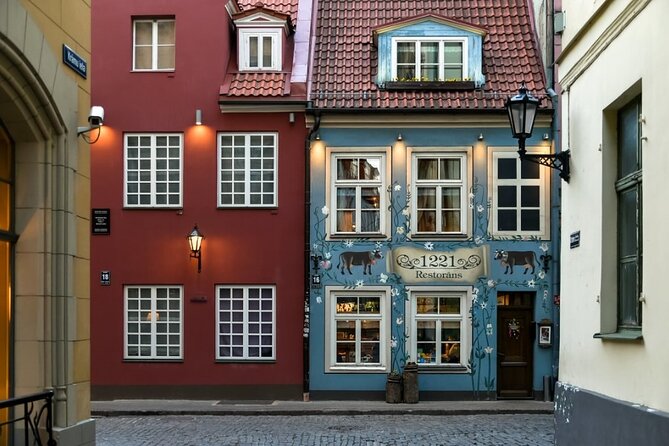
Many first visits to Riga focus on Art Nouveau buildings, medieval lanes, and cafés. Those are worth your time, but they leave out a major part of the country’s modern identity. Latvia spent decades under Soviet rule, and the effects are still visible in the city center.
This walk gives you a timeline as you move through Riga. It begins with the Soviet period and the story of the Latvian red riflemen, then turns to deportation, religious policy, surveillance, public resistance, and the final collapse of Soviet power.
The private format matters here. You are not being carried from stop to stop in a large group. You can ask why a monument remains in place, how a building was used, or what daily life felt like under Soviet rule. Edvards is especially good at linking public events to personal experience, which helps turn dates and political terms into something easier to grasp.
The tour costs $180.62 per group of up to 15 people. For a couple, that is a serious expense, about $90 per person before any additional costs. For a family or group of six, the price works out to about $30 per person. With a full group, it becomes a strong value because you are paying for the guide rather than buying fifteen separate tickets.
The tour is offered in English. Local taxes and professional guiding are included. Hotel pickup and drop-off are not included, but the start and finish are both in central Riga, close to public transport.
A few more Riga half-days to weigh up
- Private Riga Old Town Walking Tour
★ 5.0 · 62 reviews - Private Full-Day Trip to Turaida, Sigulda, and Cesis
★ 4.5 · 52 reviews - Ultimate Husky dog sledding experience in Latvia – Private tour from Riga
★ 4.5 · 45 reviews
Latviešu strēlnieku laukums and the Latvian Riflemen
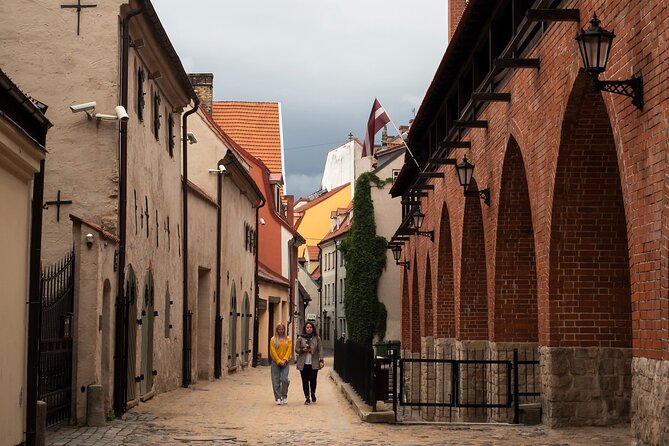
The walk begins at Latviešu strēlnieku laukums, or Latvian Riflemen Square. This is a useful opening point because the guide can explain the broad Soviet timeline before the tour moves into specific events.
You will hear about the different periods from Stalin to Gorbachev. That matters because the Soviet period was not one unchanging block of time. Stalin’s rule, the later thaw, the long Brezhnev era, and Gorbachev’s reforms brought different pressures and different possibilities for Latvia.
The square’s monument to the Latvian red riflemen opens a wider discussion about Soviet cultural memory. The riflemen were Latvian soldiers whose story was later used in Soviet political history. The monument therefore raises an awkward question: how should an independent Latvia remember figures tied to both Latvian identity and Soviet power?
You spend about 15 minutes here. That is enough time for an introduction and questions, but not for a lengthy monument study. I like starting here because it gives you a framework for the rest of the walk rather than throwing you straight into isolated facts.
Deportations and the Museum of the Occupation of Latvia
The next stop is the Museum of the Occupation of Latvia. The tour discusses deportations to Siberia, including why they happened, the scale of the removals, and their effect on Latvian families and society.
This is one of the most important parts of the route. Soviet control was not only about public monuments or official slogans. It also meant forced removal, fear, and the sudden loss of family members, homes, and livelihoods.
The stop lasts about ten minutes. The schedule lists the museum as a stop, but admission is not charged as part of the experience, and the tour description does not promise a full museum visit. You should think of this as a guided historical explanation connected to the site, not as a substitute for setting aside extra time to explore the museum on your own.
That distinction is useful when planning your day. If you want a detailed museum visit, allow separate time before or after the walk.
1991 Barikazu Laukums and the fight for independence
At 1991 Barikazu Laukums, the story moves from Soviet repression to organized resistance. This was the period of the barricades, when people in Latvia gathered to defend key buildings and support the country’s drive for independence.
The guide explains why this moment became the climax of the independence struggle. You will hear how the mood changed, how people reacted to the threat of force, and why the barricades remain so important in Latvia’s national memory.
The ten-minute stop is brief, but the subject has natural momentum. It helps you understand that independence was not simply handed back to Latvia when the Soviet Union weakened. People had to make a public stand, accept real risk, and decide how far they were willing to go.
This is also where Edvards’ personal approach can be valuable. A guide who connects political events with family experience can help you understand how national change reached ordinary households.
Same base, a completely different kind of day:
- Riga Old Town walking tour
★ 4.5 · 304 reviews - Latvian food tasting tour at Riga Central market
★ 4.5 · 241 reviews - 2 countries! Hill of Crosses, Rundale Palace and Bauska castle
★ 5.0 · 225 reviews - Discover Riga Bike Tour
★ 5.0 · 166 reviews
The Baltic Way and the power of peaceful protest
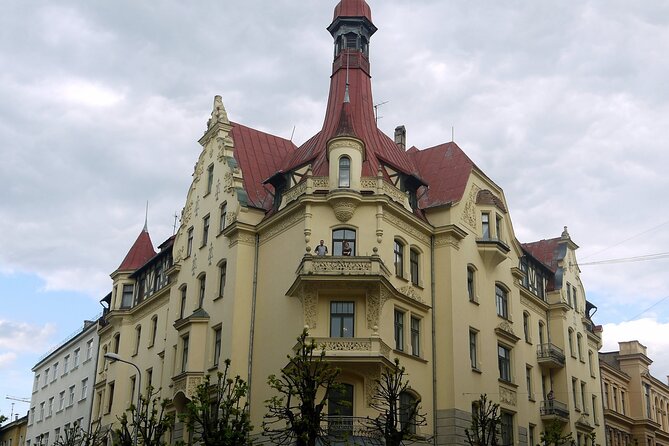
The Baltic Way Footprint Monument recalls one of the most striking anti-Soviet demonstrations in modern European history. On August 23, 1989, people in Estonia, Latvia, and Lithuania formed a human chain across the three Baltic states.
The tour discusses the practical side of the event, not just its symbolism. You will learn about the logistics of organizing such a vast line, the mood at the time, and the effect the demonstration had on the independence movement.
I like this stop because it shows how a peaceful action could carry political force. The Baltic Way was public, disciplined, and impossible to ignore. It also helped present the Baltic independence cause to the wider world.
Again, the stop is about ten minutes. The value comes from the explanation, since the physical footprint alone cannot tell you how many people took part or why the act mattered.
The Freedom Monument and the survival of national identity
The Freedom Monument is Riga’s most iconic landmark and one of the key stops on the route. Here, the guide explains its meaning and how it survived the Soviet period.
The monument represents Latvian independence, so its continued presence carries more weight than its appearance might suggest. Under Soviet rule, symbols connected to an independent Latvia could be politically sensitive. The fact that the monument remained in the city gives you a concrete way to think about the limits and tensions of Soviet control.
This is a good place to ask questions. You can connect the monument to the barricades, the Baltic Way, and the eventual return of independence. The tour works best when you treat these stops as chapters in one story rather than ten unrelated sights.
You spend roughly ten minutes here. That is enough for the central explanation, though you may want to return later for photographs or a quieter look.
Religion at the Nativity of Christ Cathedral
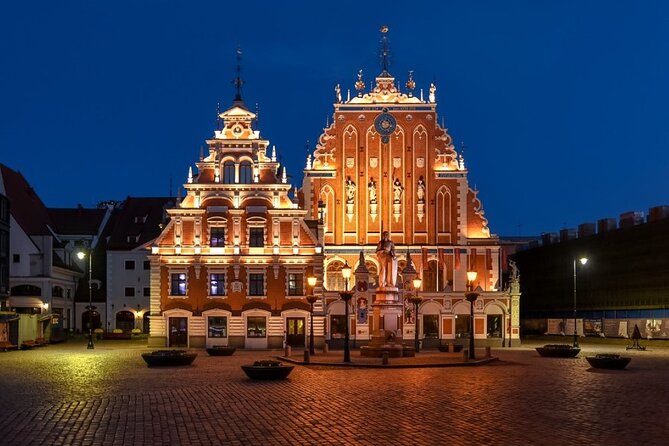
The Nativity of Christ Cathedral introduces the role of religion under Soviet rule. The guide discusses the treatment of religious institutions and the place of faith in public life during the Soviet era.
The cathedral is especially useful because it complicates the idea that Soviet policy simply erased religion. The relationship between the state and religious buildings could change over time, and religious practice did not disappear just because official ideology promoted atheism.
The tour does not promise an extended interior visit, so expect a discussion connected to the cathedral rather than a dedicated church tour. Ten minutes gives you enough time to understand the political setting, then the walk moves on.
For me, this stop adds balance. The tour is not only about prisons, deportations, and surveillance. It also looks at institutions that continued to matter to people, even when the state tried to control public belief.
Hotel Latvia and the edge of Western contact
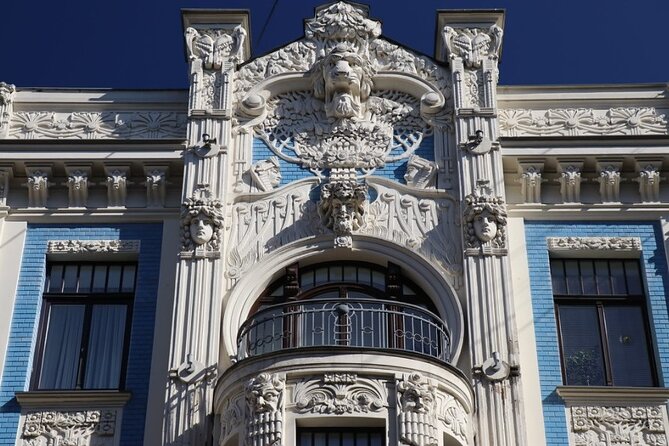
The Radisson Blu Latvija Conference & Spa Hotel was formerly Hotel Latvia. During the Soviet period, it was the only hotel where Western tourists were allowed to stay in Riga.
That made it more than a place to sleep. It was a controlled point of contact between Soviet Latvia and visitors from the West. The tour explains that rooms were famously bugged by the KGB, turning an ordinary hotel room into part of the surveillance system.
This stop gives you a glimpse of how the Soviet state managed foreign contact. Western visitors could enter, but they did not move through society on equal terms. Their accommodation, communications, and interactions could all be watched.
The guide spends about ten minutes here. You should not expect access to historic bugging equipment or a special hotel tour. The value is the context: you see how international visitors fit into Riga’s controlled public life.
Brivibas Iela, from Lenin Street to Freedom Street
Brivibas Iela means Freedom Street. During the Soviet period, it was called Lenin Street. That name change alone captures the political shift from Soviet rule to independent Latvia.
The street also provides a chance to look at Soviet-era residential architecture. These buildings are not always the sights people photograph first, but they help you picture how ordinary urban life was shaped by the period. The guide also discusses Rigas Modes, Latvia’s best-known Soviet-era fashion house.
This is a useful reminder that the Soviet experience was not only political terror. It included work, housing, fashion, shopping, and attempts to create a normal daily routine inside a tightly controlled system.
The route gives you about ten minutes here. You may want to pay attention as you walk between stops, since the street itself carries much of the story. The tour does not promise entry to Rigas Modes or a detailed architectural survey.
The KGB building and the machinery of fear
The KGB building is one of the most sobering stops. It was the headquarters of the Soviet secret police in Latvia, and the guide explains recruitment methods, interrogation methods, and the way the organization operated.
The building’s reputation can easily turn into a sensational story. A good guide keeps the focus on how surveillance and coercion worked. You will hear about the methods used to recruit people and question those suspected of opposing Soviet power.
The description also presents the building as Riga’s highest point, with the grim joke that from its top you could see all the way to Siberia. The line is darkly humorous, but it points to a real connection between local repression and deportation far from Latvia.
You spend about ten minutes at this stop. The experience does not include a guaranteed interior visit, so check your expectations before booking if you specifically want to tour former cells or exhibits inside the building.
This is likely to be the most emotionally demanding part of the walk. Families with older children may find it meaningful, but parents should decide if the subject suits their group.
The Daile Theatre and the end of Soviet power
The final stop is the Daile Theatre on Brivibas iela. Its architecture is presented as an important example of the Soviet era, and the tour ends by discussing the collapse of the Soviet Union.
Ending here gives the walk a clear final chapter. You begin with the Soviet system taking shape, pass through repression and resistance, and finish with its breakdown. The theatre also brings the story back to public culture and city design, showing how political systems leave marks on ordinary buildings.
The tour ends at the theatre, about a 15-minute walk from Riga’s Old Town. That is convenient if you want to continue sightseeing, but remember that you will need to make your own way back to your hotel.
The final stop lasts about 15 minutes. By then, you will have covered a lot of ground in a short time, so you may want a quiet coffee or museum visit afterward to sort through what you have heard.
Pace, group size, and practical planning
This is a walking tour with ten stops over roughly two hours. The listed stop times add up to about 105 minutes, leaving only a short amount of time for walking between locations. That tells you the pace will be efficient and the explanations focused.
Wear comfortable shoes. The route stays in central Riga, and it begins and ends near public transportation, but no hotel pickup or drop-off is included.
A private group can include up to 15 people. That makes the tour flexible for families, friends, or a small organized group. It also means the financial value depends heavily on your party size. A couple pays much more per person than a group of eight, but the couple gets more freedom to ask questions and shape the conversation.
Children must be accompanied by an adult. Most people can take part, and service animals are allowed.
Confirmation is sent within 48 hours of booking, subject to availability. You can cancel for a full refund up to 24 hours before the start time. Changes or cancellations inside that 24-hour window are not accepted for a refund.
Who will get the most from this Riga tour?
I would choose this walk if you want to understand Riga beyond its postcard sights. It suits you especially well if you are interested in 20th-century politics, family memory, national identity, architecture, or the peaceful independence movements of the Baltic states.
It is also a good first-day activity for someone who wants a guide to set the city’s modern context. The route gives you useful background before you visit the Museum of the Occupation of Latvia or explore the KGB building on your own.
You may want a different experience if you prefer long museum visits, leisurely photography, or a tour centered on medieval Riga and Art Nouveau. The schedule is tight, and the route covers serious material quickly.
Should you book the Private Soviet Riga tour?
Book it if you want a focused explanation of Latvia’s Soviet past and you value conversation over a scripted group walk. Edvards’ personal connection to the subject, clear explanations, and willingness to answer questions are central to the experience.
For two people, the cost is high. For a family or larger private group, it becomes much better value. Just allow extra time for the Museum of the Occupation of Latvia if you want to go beyond the ten-minute guided stop.
This is not a light sightseeing stroll. It deals with deportation, surveillance, interrogation, religion, and political fear. But it also shows courage, public solidarity, and the return of independence. If that balance interests you, the tour gives you a useful and human way into Riga’s recent past.
FAQ
How long is the Private Soviet Riga tour?
The tour lasts approximately two hours.
Where does the tour begin?
It begins at Latviešu strēlnieku laukums in central Riga.
Where does the tour finish?
The tour ends at the Daile Theatre, at Brīvības iela 75. It is approximately a 15-minute walk from Riga’s Old Town.
How many people can join the private tour?
The price covers one private group of up to 15 people.
Is the tour offered in English?
Yes. The experience is offered in English.
Is hotel pickup or drop-off included?
No. Hotel pickup and drop-off are not included.
Can I cancel for a full refund?
Yes. You can cancel at least 24 hours before the start time for a full refund. Cancellations or changes made less than 24 hours before the start time are not accepted for a refund.
Just added around Riga
- Ultimate Art Nouveau Experience in Riga – Private Tour★ 5.0 · 4 reviews
- Tour from Riga to Vilnius: Bauska Castle, Rundale Palace and The Hill of Crosses★ 5.0 · 3 reviews
- Group Tour: Sigulda and Turaida from Riga.★ 4.5 · 3 reviews
- Fun Walk Private Tour Around Central Market Riga★ 4.5 · 3 reviews
- Riga Medieval Dinner★ 4.0 · 4 reviews
- Riga’s Architecture: A self-guided audio tour of the city’s art nouveau history★ 5.0 · 3 reviews
- Hiking Adventure in Gauja National Park – 7 Days★ 5.0 · 3 reviews
- Latvia’s Switzerland and Gauja National Park Tour★ 5.0 · 3 reviews
Private, compared.
Ultimate Husky dog sledding experience in Latvia – Private tour from Riga
Read our review →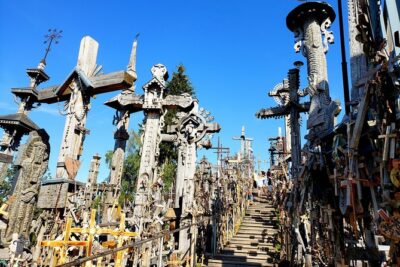
Private trip – Hill of Crosses / 2 countries in 1 day
Read our review →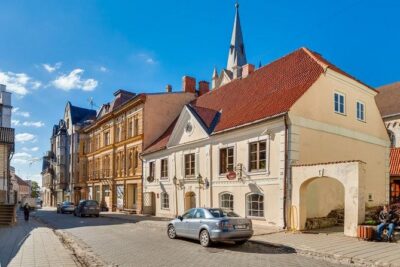
Full-Day Private Trip to Cesis, Sigulda and Turaida from Riga
Read our review →
Private Full-Day Trip to Hill of Crosses, Rundale Palace & Bauska
Read our review →
Private Boat Tour experience in Riga (City Canal and Daugava)
Read our review →