
Reviewed · HILL OF CROSSES DAY TRIPS
Tour from Riga – Vilnius via Bauska, Rundale, The Hill of Crosses
The clever part of this trip is that it turns a necessary transfer into a full day of sightseeing. Instead of spending the whole route between Riga and Vilnius on a direct bus, you stop at Bauska Castle, grand Rundale Palace, and Lithuania’s remarkable Hill of Crosses before arriving in central Vilnius.
I like the useful door-to-door logic and the chance to reach places that are awkward to visit by public transport. I also like the small-group feel, with a comfortable vehicle, room for luggage, and drivers such as Adam, Andris, and Andrew often providing history and local tips along the way. The main caution is that this is a tightly managed day. If you dislike fixed departure times or need a slow pace, the schedule may feel firm.
Key points to know before booking
- Three major stops in one transfer: See Bauska Castle, Rundale Palace, and the Hill of Crosses while moving from Latvia to Lithuania.
- Rundale gets the most time: Two hours allows time for the palace, gardens, and possibly lunch.
- The Hill of Crosses is free: You can explore this powerful religious site without paying an entrance fee.
- Admission costs are separate: Bauska Castle and Rundale Palace require tickets if you want to enter.
- Small groups can vary: The vehicle may carry only a few people, but the maximum group size is 38.
- Bring your passport: This is an international journey from Latvia into Lithuania, and a valid passport is required.
Why this transfer works better than a direct bus
A direct ride between Riga and Vilnius is simpler, but it leaves out the countryside and the sights between the two capitals. This service gives you a practical reason to visit southern Latvia and northern Lithuania without arranging separate day trips, taxis, or return transport.
At about $114.65 per person, the value depends on how you use it. If you already need to get from Riga to Vilnius, the price covers transportation plus three substantial sightseeing stops. You still pay for palace and castle admission, food, and drinks, but the basic transport cost can compare well with booking a standard transfer and separate excursions.
You also avoid the trouble of returning to Riga after visiting Bauska or Rundale. That matters because both sites are outside the main city centers, and the Hill of Crosses is about 16 kilometers from Šiauliai. This is not simply a sightseeing loop. It is a one-way travel day with useful stops built into the route.
The trip begins at the Latvian Riflemen Monument in central Riga at 9:00 am and ends at Cathedral Square in central Vilnius. That central arrival is handy if you are staying in the old town area or want to begin exploring as soon as you arrive.
More day trips out to the Hill of Crosses:
- 2 countries! Hill of Crosses, Rundale Palace and Bauska castle
★ 5.0 · 225 reviews - From Riga: Hill of Crosses & Jelgava Highlights
★ 5.0 · 149 reviews - 5,5 Hour Small Group Tour to Hill of Crosses from Riga
★ 5.0 · 127 reviews
Bauska Castle: One hour among medieval ruins
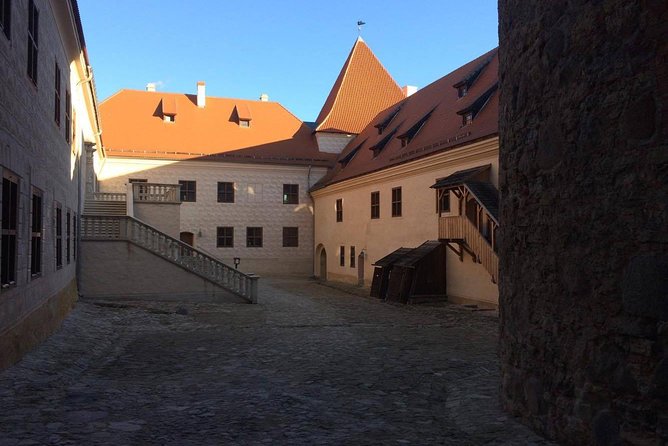
The first stop is Bauska Castle, set between the Mūsa and Mēmele Rivers near Bauska. The site has two distinct parts, and that division gives the visit its appeal.
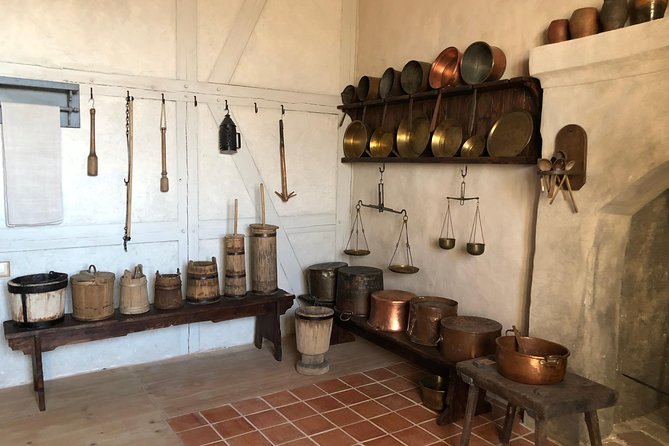
The older section is the ruined Livonian Order castle, built in the middle of the 15th century. The newer section was built at the end of the 16th century as a residence for the Duke of Courland. The Russian army destroyed much of the castle complex during the Great Northern War, so you see a mix of restored rooms and open ruins rather than one complete fortress.
The Duke of Courland’s residence has been restored and now houses the castle museum. The Livonian Order section remains largely in ruins, which gives you a clear sense of the site’s long, complicated past. You can compare the practical military stronghold with the later ducal residence in a short walk.
You have about one hour here, and that is the first place where the schedule may feel tight. Admission is not included, so decide before departure if you want to go inside. If you only want an exterior look and photographs, the stop is easier to manage. If you want the museum and restored rooms, use your time carefully and return to the vehicle promptly.
This is a good first stop because it breaks up the morning and introduces the history of Courland. It is not the largest or most elaborate sight of the day, but it adds a real sense of place rather than serving as a quick roadside photo stop.
Rundale Palace: Latvia’s grandest interior
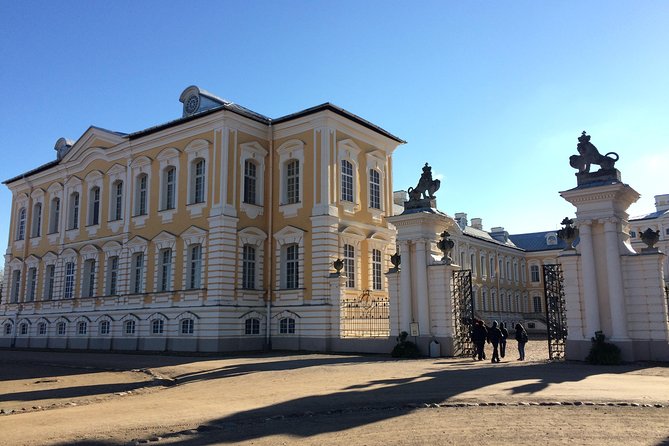
Rundale Palace is the visual centerpiece of the route. Located only about 15 kilometers from the Latvian Lithuanian border, it was built in the 18th century by Ernst Johann von Biron as a summer residence for the Duke of Courland.
The architect was Francesco Bartolomeo Rastrelli, who also designed the Winter Palace in Saint Petersburg. That connection helps explain the palace’s formal rooms, decorative style, and grand scale. Rundale is often called the Versailles of Latvia, and the nickname makes sense as a quick comparison, though the palace has its own Baltic setting and history.
The building has not always been a palace museum. Over the years it was used as a hospital, an elementary school, and even a grain store. Extensive restoration has returned much of its former polish, and the museum now includes the palace interiors and gardens.
You get about two hours here, enough for a meaningful visit. I would give Rundale priority if you are deciding where to spend extra attention. The restored rooms are the main attraction, while the gardens add room to walk and slow down after the morning drive.
Food is not included, but the time at Rundale can allow for lunch. Several departures have included enough free time for a seated meal, though you should not treat this as guaranteed restaurant time. Bring a snack if you prefer not to risk eating into your visit.
Rundale can also feel pleasantly quiet, depending on the day. One departure found the palace nearly empty, which made the rooms easier to appreciate. The tour operates only on Tuesday, Thursday, and Saturday, so the atmosphere may vary with the date, but the two-hour stop gives you more breathing room than Bauska.
The Hill of Crosses: The day’s most powerful stop
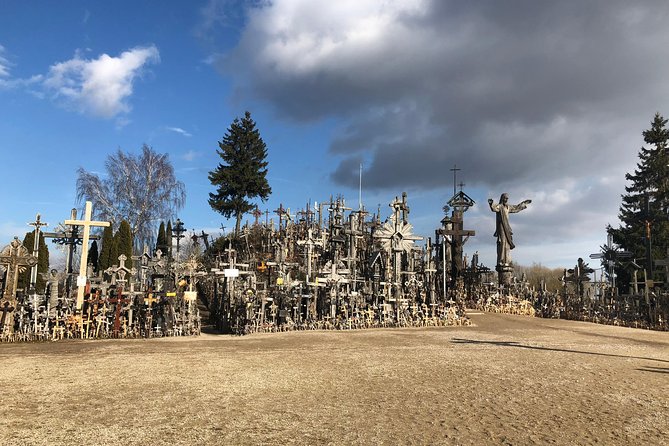
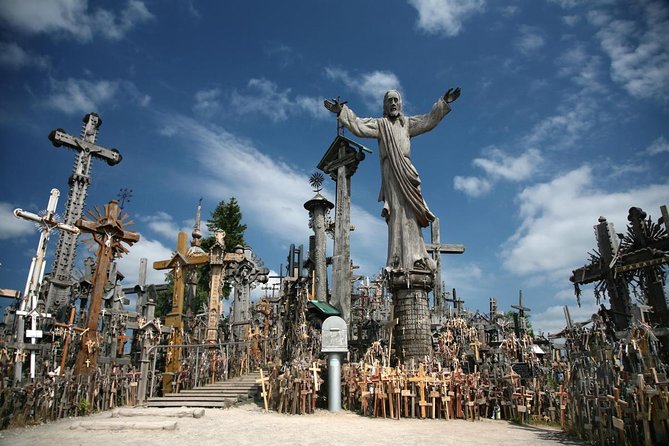
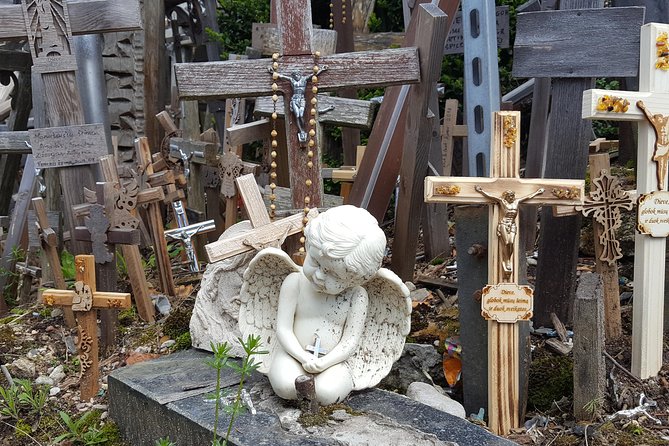
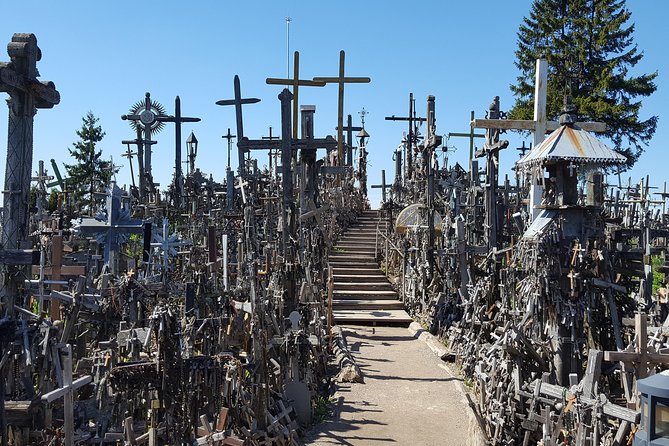
The Hill of Crosses, or Kryžių Kalnas, is near Šiauliai in Lithuania. It is a small hill covered with crosses, with the total often described as more than 200,000. The site is a major example of Lithuanian religious folk art, but it also carries a strong political meaning.
The crosses represent faith, remembrance, and resistance during periods of occupation. You do not need a long guided lecture to understand the basic power of the place. Walking among the dense layers of wooden, metal, and personal crosses gives the stop an atmosphere unlike anything else on this route.
The visit lasts about one hour, and admission is free. That makes it an easy inclusion in the day, though you should wear shoes suitable for uneven ground and changing weather. Those practical details are not specified by the operator, so think of the stop as an outdoor visit rather than a polished museum experience.
This is often the emotional high point of the journey. Bauska gives you ruins, Rundale gives you architecture and interiors, and the Hill of Crosses gives you a living expression of belief and national memory. The three stops work well together because they offer very different experiences.
Do not expect a conventional attraction with a clear beginning and end. You wander, look closely, and decide what interests you. The hour is enough to get a strong impression, but if you want to study every cross or take extended photographs, you may wish for more time.
More trips to Rundale Palace:
- Group Day trip to Rundale Palace, Hill of Crosses & Bauska Castle
★ 5.0 · 92 reviews - Private Full-Day Trip to Hill of Crosses, Rundale Palace & Bauska
★ 5.0 · 36 reviews - Riga: Hill of Crosses & Guided Rundale Palace with Bauska Castle
★ 5.0 · 20 reviews - Hill of Crosses & Rundale Palace Tour
★ 5.0 · 18 reviews
The vehicle, luggage, and group size
Transportation is by comfortable vehicle with room for a reasonable amount of luggage. This is one of the most useful features for anyone changing hotels or countries on the same day. You do not need to store bags in Riga or arrange a second transfer from Vilnius.
The group size can be as high as 38 people, though actual departures may be much smaller. Some rides have used a large van shared by about seven passengers, while others have had only four people or a very small group. That means the feel of the day can vary considerably.
A small group gives you an easier chance to ask questions and may make loading and unloading faster. A fuller vehicle offers less personal space and makes seating more important. One small group found that a couple had to sit separately because of the seating arrangement, so do not assume every party will sit together.
Air conditioning has also been a concern on at least one departure, despite being expected. Vehicle comfort can vary, so keep a light layer and water close by rather than packing everything into the luggage compartment.
The driver may open the luggage area only at set times. Keep passports, medication, water, and anything you need during the day in a small day bag inside the vehicle. This is a simple way to avoid being caught short between stops.
The driver is also part of the experience
The driver is not just handling the road. In many departures, the driver also provides the commentary, explains what you are seeing, answers questions, and helps keep the day on schedule.
Adam has been praised for safe driving, friendly service, lunch suggestions, and small practical touches such as stopping beside a curb to make getting out easier. Andris has been described as an early arrival who helped with luggage and narrated the route. Andrew has also been praised for historical explanations, humor, and careful timing.
The style can vary. Some guides are relaxed and conversational. Others take a strict approach to departure times and vehicle routines. One departure had an uncomfortable experience with a guide who spoke harshly to people who were late, while another found the same named guide well informed and helpful. The sensible lesson is to listen closely to the return time and treat it as firm.
The product information also refers to a guidebook or live guide, while guide service itself is not listed as included. In practice, you should expect the driver to provide information on many departures, but do not book this as a full private guided tour. The strongest value comes from the transport and access to the sites, with commentary as an added benefit.
Timing, border crossing, and arrival in Vilnius
The advertised duration is about eight hours, though some journeys take closer to nine hours. You are covering two countries, three stops, meals or snack breaks, and the final drive into Vilnius, so this is a full day rather than a quick shuttle.
The schedule is built around fixed meeting times. Bauska receives about one hour, Rundale two hours, and the Hill of Crosses one hour, with the remaining time used for driving and transfers. A driver may ask you to return to the van exactly when instructed, especially if the group must reach Vilnius before evening.
A valid current passport is required on the day of travel. Even though Latvia and Lithuania are both in the European Union, you should still carry the required travel document and keep it accessible. The route crosses an international border, and the operator specifically requires a passport.
The normal end point is Cathedral Square in Vilnius. Traffic or special events can affect the final drop-off. One departure arrived during a Vilnius marathon, and the driver found the closest practical drop-off point. Plan your first Vilnius booking with a little flexibility rather than scheduling an immediate appointment.
Who should book this Riga to Vilnius tour?
I would choose this for a first Baltic trip when you want to see more than the two capitals. It suits solo visitors, couples, and small groups who need one-way transport and like the idea of turning travel time into sightseeing.
It is also a strong choice if you have limited time in Riga. Instead of using a separate day to reach Rundale and Bauska, you see both while heading south. The Hill of Crosses then gives you a worthwhile first look at Lithuania before you reach Vilnius.
You should think twice if you want a slow, highly personal tour with long meals and flexible stops. This is a group transfer with a set clock. The guide may be warm and informative, but the experience depends partly on the driver assigned to your departure.
The tour operates on Tuesday, Thursday, and Saturday. It is guaranteed to depart, and confirmation is provided when you book. Free cancellation is available if you cancel at least 24 hours before the 9:00 am start time. Changes or cancellations inside that window are not accepted for a refund.
Should you book it?
Book this tour if you need to travel from Riga to Vilnius and want Bauska Castle, Rundale Palace, and the Hill of Crosses included without arranging separate transport. The combination saves time, uses your luggage move efficiently, and gives you a useful cross-border travel day for about $114.65.
I would book it especially for Rundale Palace and the Hill of Crosses. Bauska is worthwhile, but the palace and the hill provide the strongest contrast and the most memorable stops. Just budget for castle and palace admission, bring your passport, keep your essentials in a day bag, and be ready to follow a firm schedule.
FAQ
How much does the Riga to Vilnius tour cost?
The listed price is $114.65 per person. Food, drinks, and entrance tickets are not included.
How long does the trip take?
The advertised duration is about eight hours. Actual journeys may take closer to nine hours, depending on traffic and the day’s conditions.
Where does the tour start and finish?
The tour starts at the Latvian Riflemen Monument in Riga at 9:00 am. It ends at Cathedral Square in Vilnius.
Which days does the tour operate?
The tour runs on Tuesday, Thursday, and Saturday.
Is a passport required?
Yes. A current valid passport is required on the day of travel.
Are entrance tickets included?
No. Admission to Bauska Castle and Rundale Palace is not included. Entry to the Hill of Crosses is free.
Just added around Riga
- Ultimate Art Nouveau Experience in Riga – Private Tour★ 5.0 · 4 reviews
- Tour from Riga to Vilnius: Bauska Castle, Rundale Palace and The Hill of Crosses★ 5.0 · 3 reviews
- Group Tour: Sigulda and Turaida from Riga.★ 4.5 · 3 reviews
- Fun Walk Private Tour Around Central Market Riga★ 4.5 · 3 reviews
- Riga Medieval Dinner★ 4.0 · 4 reviews
- Riga’s Architecture: A self-guided audio tour of the city’s art nouveau history★ 5.0 · 3 reviews
- Hiking Adventure in Gauja National Park – 7 Days★ 5.0 · 3 reviews
- Latvia’s Switzerland and Gauja National Park Tour★ 5.0 · 3 reviews
Hill of Crosses Day Trips, compared.

2 countries! Hill of Crosses, Rundale Palace and Bauska castle
Read our review →

5,5 Hour Small Group Tour to Hill of Crosses from Riga
Read our review →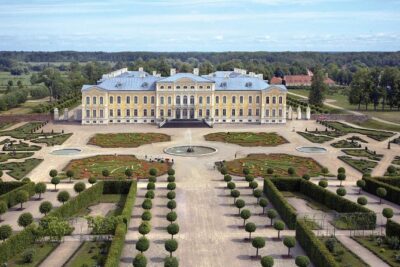
Group Day trip to Rundale Palace, Hill of Crosses & Bauska Castle
Read our review →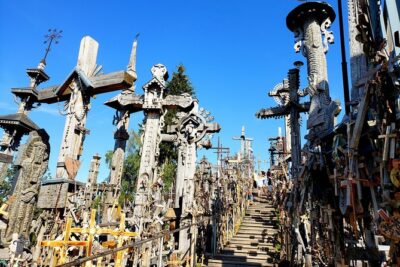
Private trip – Hill of Crosses / 2 countries in 1 day
Read our review →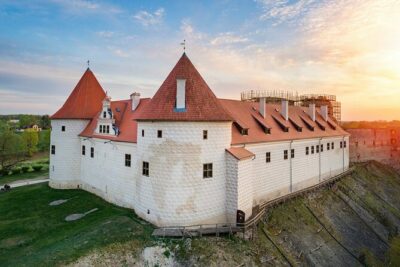
Private Full-Day Trip to Hill of Crosses, Rundale Palace & Bauska
Read our review →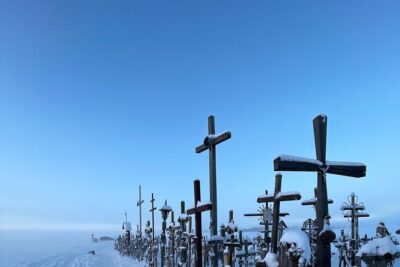
Hill of Crosses and Jelgava Gems Tour – 2 countries in 1 day
Read our review →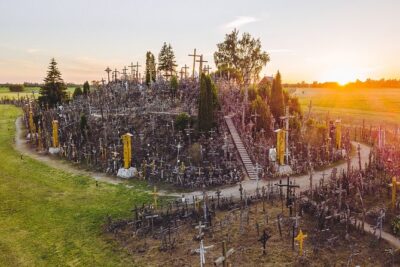
Hill of Crosses & Guided Rundale Palace with Bauska Castle
Read our review →Browse the lists this tour appears in