
Reviewed · RIGA
Visit of Salaspils Memorial Ensemble
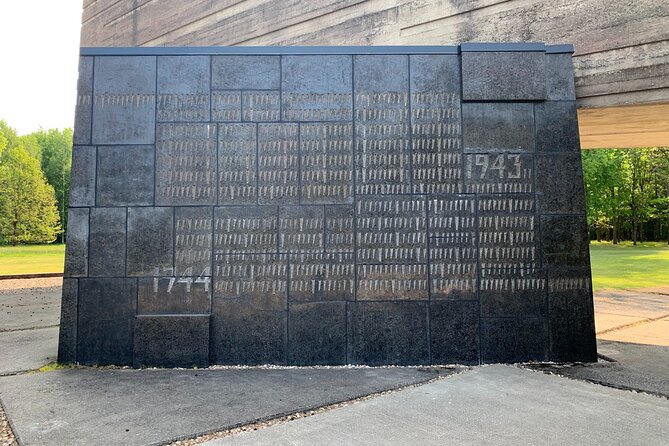
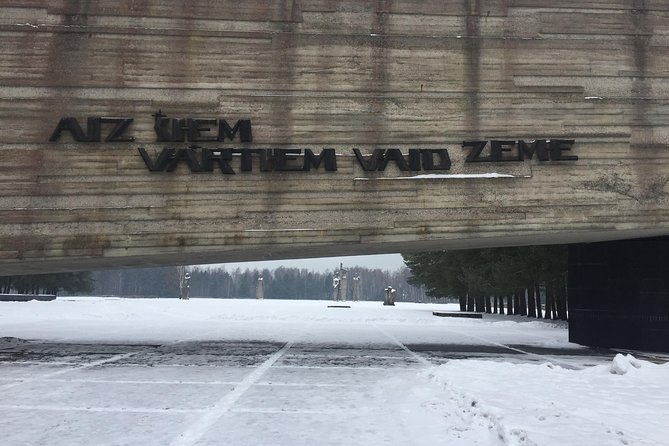
Salaspils is not a light sightseeing stop. Behind a 100-metre concrete wall marked Beyond these gates the land groans, seven huge sculptures face the silence of the former camp grounds. The memorial asks you to slow down, listen, and think. Its power comes from the setting, not from a long list of attractions.
I like two things here: the private guide can explain the memorial in clear historical context, and the visit stays small, with no more than eight people. Guides Kristine and Krista are praised for their care, warmth, and grasp of Latvian and Soviet-era history. The indoor exhibition adds facts and documents after the stark outdoor walk.
The main drawback is the limited time. The visit lasts about two to three hours, with roughly one hour at Salaspils and an optional 25-minute stop at Rumbula. This is a serious memorial visit, not a broad Riga sightseeing tour, and the outdoor site may feel spare if you prefer lively attractions.
Key points at a glance
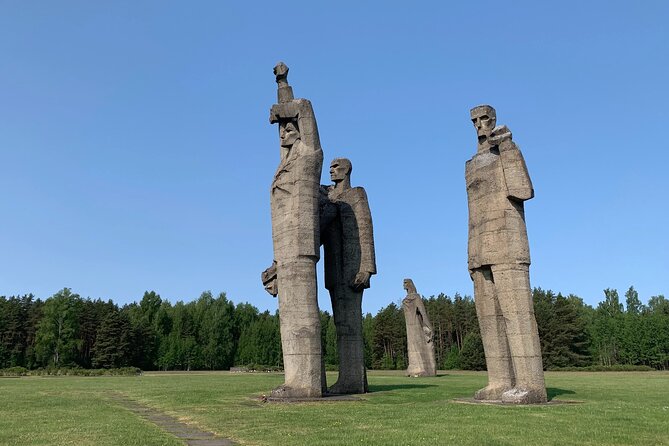
- Seven massive sculptures: Walk among Mother, The Unbroken, The Humiliated, Protest, Red Front, Solidarity, and The Oath.
- A private English-speaking guide: Kristine and Krista are named guides connected with especially strong feedback for thoughtful explanations.
- Indoor historical material: Read written information and watch short documentary films after seeing the memorial grounds.
- Optional Rumbula stop: Add about 25 minutes at one of Europe’s major Holocaust sites.
- Small-group transport: Travel from Riga in private transportation, with a maximum of eight people and bottled water included.
- A focused half-day outing: The listed price is $72.25 per person for a direct, history-led visit outside central Riga.
Why Salaspils asks for your attention
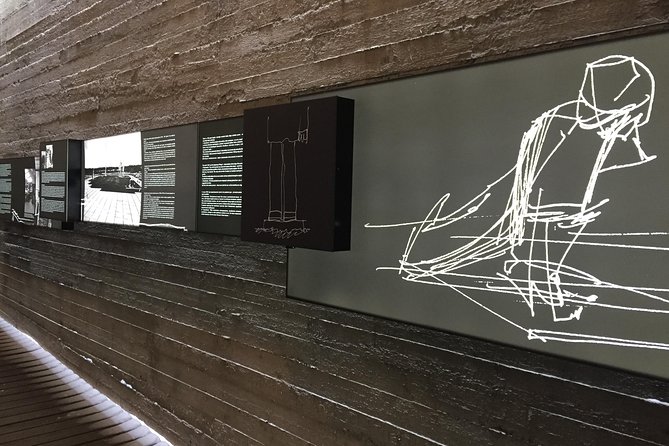
Riga has handsome streets, cafés, and grand buildings, but Latvia’s past cannot be understood from the old center alone. Salaspils takes you to a former camp site used during the Nazi period, now marked by one of Europe’s largest monument complexes commemorating victims of Nazism.
I find the memorial effective because it does not try to entertain you. You pass through a long concrete wall and enter an open area where seven oversized sculptures carry the emotional weight. The names are direct: Mother, The Unbroken, The Humiliated, Protest, Red Front, Solidarity, and The Oath.
The memorial’s scale matters. These are not small plaques tucked beside a road. The sculptures are built to make you feel their presence, while the broad, quiet grounds leave room for thought. Your guide can help connect the symbols with the site’s history, which is particularly useful if you do not already know much about wartime Latvia.
The mood is solemn from the start. I would not schedule this outing between a food tour and a shopping stop unless you have enough time to reset afterward. Salaspils deserves attention and quiet.
Other days out in Riga that people book alongside this one:
- Riga Old Town walking tour
★ 4.5 · 304 reviews - Latvian food tasting tour at Riga Central market
★ 4.5 · 241 reviews - 2 countries! Hill of Crosses, Rundale Palace and Bauska castle
★ 5.0 · 225 reviews
The 100-metre wall and seven concrete figures
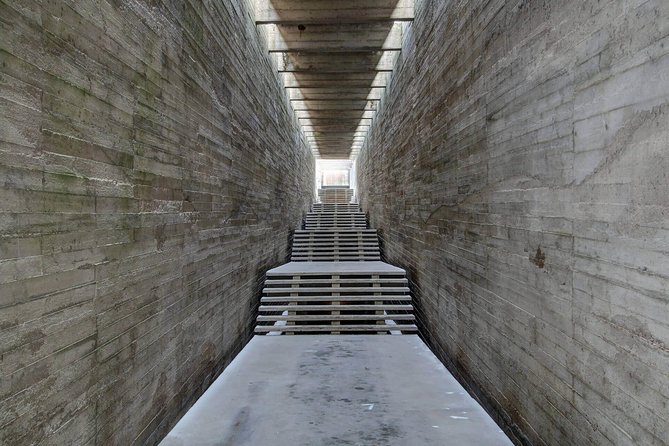
The outdoor portion takes about one hour. You walk through the memorial complex rather than simply stopping for a photograph, and that distinction is important. The route gives you time to see the sculptures from different angles and absorb the relationship between the wall, the open grounds, and the figures.
The entrance wall carries the Latvian memorial’s central warning, translated as Beyond these gates the land groans. It is a stark line, and it sets the tone before your guide begins explaining the site.
Each sculpture has a name that points toward a human response to suffering. Mother suggests loss and grief. The Unbroken and The Oath suggest endurance and commitment. Protest and Solidarity bring a public, collective force to the space. The names help you read the monument even before the guide adds detail.
I like that the site does not reduce the past to a quick photo opportunity. You have time to walk between the monuments, remain quiet, and ask questions. With a private guide, the pace can be adjusted to your interest. If you want more explanation, ask. If the silence is doing more for you than another speech, you can pause.
There is a practical point here: the memorial is mainly an outdoor experience. The tour details do not promise extensive indoor shelter or a long café break, so dress for the weather. The listed duration is approximate, and conditions at the site can shape how long you want to stay outside.
The indoor exhibition adds names, facts, and film
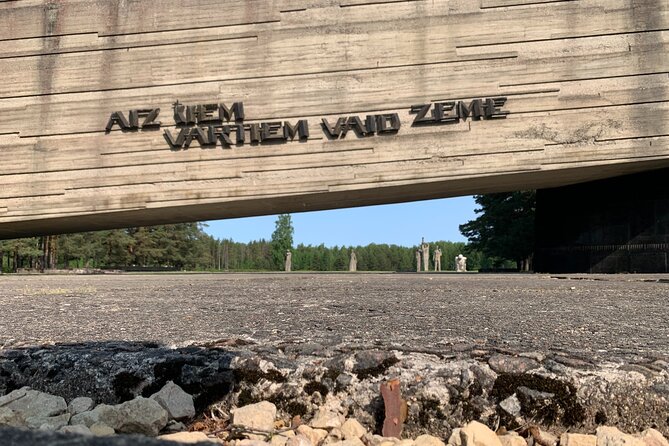
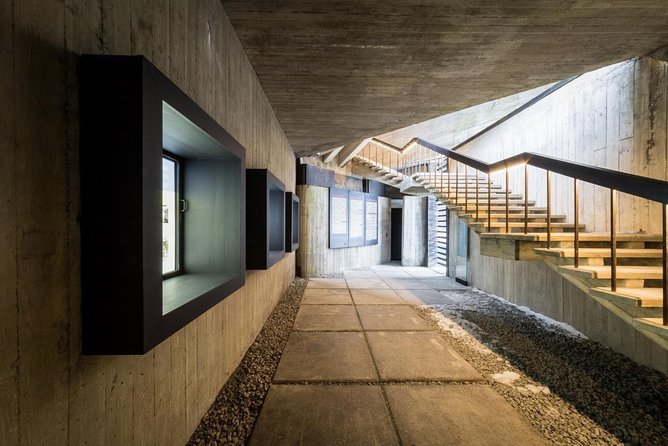
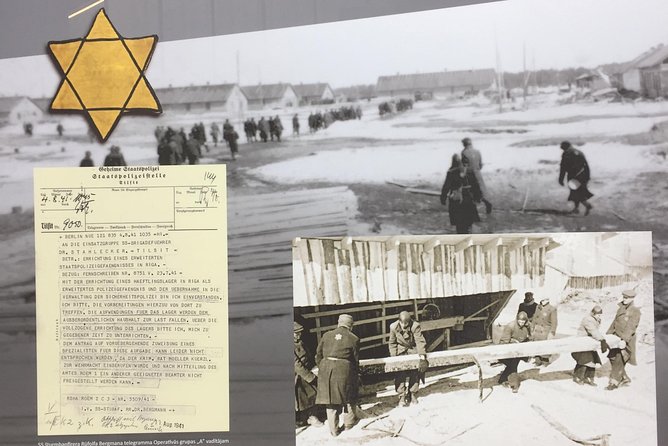
After the monument walk, you visit an indoor exhibition. This is where the experience shifts from symbolic memorial to historical interpretation.
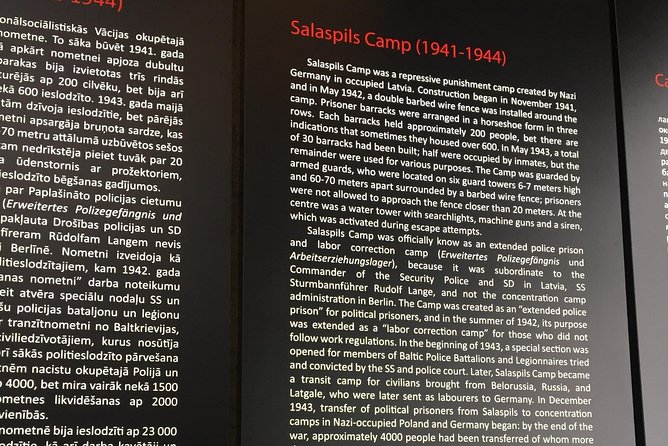
You can expect a substantial amount of written information, along with short video documentaries and historical artifacts. That format rewards visitors who want facts and context rather than only a dramatic outdoor setting. Read the material at your own pace, then use your guide to clarify what you have seen.
The exhibition is also a useful balance to the sculptures. The outdoor complex communicates grief and resistance through size, shape, and silence. Inside, the written material and films give you a more factual framework. Together, the two parts make a stronger visit than either one alone.
Do not assume that the indoor stop will feel like a large museum. The information supplied describes an exhibition with written material, artifacts, and short documentaries, but it does not give its exact size or the number of displays. Plan for an informative stop, not a full museum afternoon.
If you have limited background in Latvian history, this is one of the best reasons to choose a guide. Kristine and Krista are praised for explaining not only Salaspils, but also wider Latvian and Soviet-period history. Their role is especially useful when the exhibition presents material that needs local context.
Rumbula Forest gives the day a second focus
The optional stop at Rumbula Memorial takes about 25 minutes. Rumbula is described as one of Europe’s largest Holocaust sites, so this is not a casual add-on. It gives the outing a second place of remembrance and connects the day to another major site linked with Nazi crimes in Latvia.
The stop is optional, which is helpful. You can decide based on your schedule, energy, and the amount of time you want to spend with this subject. If you are specifically visiting Riga to understand wartime history, I would ask about including it when you book or confirm the tour.
The supplied details do not specify the exact walking route or the full interpretation available at Rumbula. For that reason, think of it as a short memorial stop rather than a second full guided visit. Its value comes from placing another important site into the same historical day.
The two memorials also differ in tone. Salaspils has a major sculptural complex and an indoor exhibition. Rumbula is a brief forest memorial stop. That contrast can make the day more meaningful, but it also means you should not expect both locations to offer the same depth of presentation.
Same base, a completely different kind of day:
- Discover Riga Bike Tour
★ 5.0 · 166 reviews - From Riga: Hill of Crosses & Jelgava Highlights
★ 5.0 · 149 reviews - Riga Gun Range: shooting with Winchester, Glock17, & Kalashnikov
★ 5.0 · 148 reviews - Best of Riga Walking Tour – Highlights and Hidden Gems
★ 5.0 · 147 reviews
Why a private guide changes the experience
A private guide is the strongest reason to choose this outing instead of trying to reach Salaspils alone. The memorial is powerful, but its meaning is not always obvious from the concrete forms. A guide can explain the site, answer questions, and connect the memorial to Latvia’s wider past.
The small maximum of eight people keeps the visit personal. You are not being moved through in a large line, and the guide has a better chance to notice what interests you. That matters at a memorial, where some people want detailed history and others need more quiet time.
Kristine is singled out for combining care with strong historical understanding. Krista is praised for explaining Salaspils, the monument, and the Soviet period, while also offering suggestions for other Latvian sights. Those details suggest that you can expect more than a memorized speech, though your actual guide depends on availability.
The experience is offered in English. If you are interested in Latvia beyond the standard old-town route, this is a useful way to ask about context while you travel. One particularly helpful detail from the tour is that guides may also explain Riga during the drive, giving you a wider sense of the city and its past.
Transport from Riga and the pickup details
The tour includes private transportation from Riga and is designed to return you to the starting point. The published meeting point is St. Peter’s Church at Reformācijas Laukums 1 in central Riga. The experience also describes hotel pickup, and one booking included pickup near a ship’s gate.
Because those details do not perfectly match one single meeting arrangement, confirm your exact pickup point before the day of the tour. If you are staying at a hotel, ask if door-to-door pickup applies to your address. If you arrive by cruise ship, ask specifically about pickup at the port gate.
The drive itself can add value. One account describes receiving information about Riga and Salaspils during transport, with enough time afterward for a drive around the city and a downtown drop-off. That extra city driving is not guaranteed as a formal part of every departure, so treat it as a possible benefit rather than a promise.
Private transport also removes the need to work out your own route to a site beyond Riga. That makes the $72.25 price easier to assess. You are paying not only for entry, which is free, but for a guide, vehicle, time, and a more direct connection between the city and the memorial.
Is $72.25 a fair price?
The admission tickets to both memorial sites are free, so the price needs to be judged on service rather than entrance fees. At $72.25 per person, the tour is not the cheapest way to see a memorial, but it can be fair value if you want private transport and an English-speaking guide.
The value improves if you are traveling alone or with a small party. A private guide can provide historical context that you may not get from simply arriving at Salaspils and walking around. You also avoid the planning burden of reaching the site independently.
The value is less clear if you only want a quick photograph or if you already know the history well. In that case, the one-hour Salaspils visit may feel short, and the optional Rumbula stop adds emotional weight rather than more sightseeing variety.
Bottled water is included. Lunch is not, and the listed schedule runs from noon to 3 p.m. Plan to eat before or after unless you confirm another arrangement. The tour is best seen as a compact history excursion, not a full-day outing with meals.
The high satisfaction rate and five-star average from 10 reviews indicate a strong record, but the sample is small. I would put the most weight on the repeated praise for the guides’ care and historical explanations, since those are the parts that shape the experience most.
Who should book this memorial tour?
I would recommend it to you if you have a serious interest in World War II history, Holocaust memorials, Latvia, or the Soviet period. It also suits anyone who wants to see a significant site that does not usually appear on a basic Riga sightseeing route.
The tour works well for a first visit to Latvia when you want a fuller picture than the Old Town can provide. The guide’s explanations during transport and at the memorial can help connect the city you see today with difficult periods in its past.
It may not suit young children or anyone looking for a cheerful activity, though the supplied information says most people can participate. The subject is grave, and the outdoor site is built for reflection rather than entertainment.
The small group also suits independent-minded visitors. You can ask questions without competing with a busload of people, and you have a better chance of setting a respectful pace. Service animals are allowed, and the site is near public transportation, though private transport is part of this experience.
Timing, confirmation, and cancellation
The activity is listed daily from noon to 3 p.m., with an approximate total duration of two to three hours. Confirmation is normally sent at booking, though bookings made within 12 hours of departure are confirmed as soon as possible and depend on availability.
Free cancellation is available if you cancel at least 24 hours before the start time. Changes or cancellations inside that 24-hour window are not accepted for a refund. The experience also requires a minimum number of participants, so if the provider cancels for that reason, you are offered another date or experience, or a full refund.
Since the tour is often booked well in advance, around 46 days on average, reserve early if your Riga dates are fixed. The group limit is eight, and the most suitable guide or pickup time may not remain open close to departure.
My recommendation: book it for meaning, not entertainment
Book the Salaspils Memorial tour if you want a focused, carefully guided look at one of Latvia’s most serious historical sites. The sculptures, the concrete wall, and the quiet grounds create a strong first impression, while the exhibition and an informed guide supply the facts needed to understand it.
I especially like the private format, the option to add Rumbula, and the chance to hear from guides such as Kristine or Krista. Confirm the pickup point, ask if Rumbula is included in your preferred timing, and plan for a solemn outdoor visit.
Skip it if you have only a few hours in Riga and want architecture, food, or light sightseeing. Choose it if you want history that reaches beyond the center of the city. At $72.25, the value lies in access, transport, and human explanation, not in admission tickets.
FAQ
Where does the tour start?
The listed meeting point is St. Peter’s Church at Reformācijas Laukums 1 in central Riga. Hotel pickup is also described, so confirm the exact pickup arrangement when booking.
Where does the tour end?
The activity ends back at the meeting point.
How long does the experience last?
The total duration is approximately two to three hours. The Salaspils Memorial visit takes about one hour, and the optional Rumbula stop takes about 25 minutes.
Is the tour offered in English?
Yes. The experience is offered in English.
How many people can join the tour?
The maximum group size is eight people.
Is admission to Salaspils included?
Admission to the Salaspils Memorial Ensemble is free. The Rumbula Memorial stop is also listed as free.
Is Rumbula Forest Memorial included?
Rumbula is an optional stop. It takes about 25 minutes when included in the visit.
Is lunch included?
No. Lunch is not included, though bottled water is provided.
Can I cancel for a full refund?
Yes, if you cancel at least 24 hours before the experience start time. Cancellations made less than 24 hours before departure are not refunded.
Just added around Riga
- Ultimate Art Nouveau Experience in Riga – Private Tour★ 5.0 · 4 reviews
- Tour from Riga to Vilnius: Bauska Castle, Rundale Palace and The Hill of Crosses★ 5.0 · 3 reviews
- Fun Walk Private Tour Around Central Market Riga★ 4.5 · 3 reviews
- Group Tour: Sigulda and Turaida from Riga.★ 4.5 · 3 reviews
- Riga’s Architecture: A self-guided audio tour of the city’s art nouveau history★ 5.0 · 3 reviews
- Riga Medieval Dinner★ 4.0 · 4 reviews
- Hiking Adventure in Gauja National Park – 7 Days★ 5.0 · 3 reviews
- Latvia’s Switzerland and Gauja National Park Tour★ 5.0 · 3 reviews